

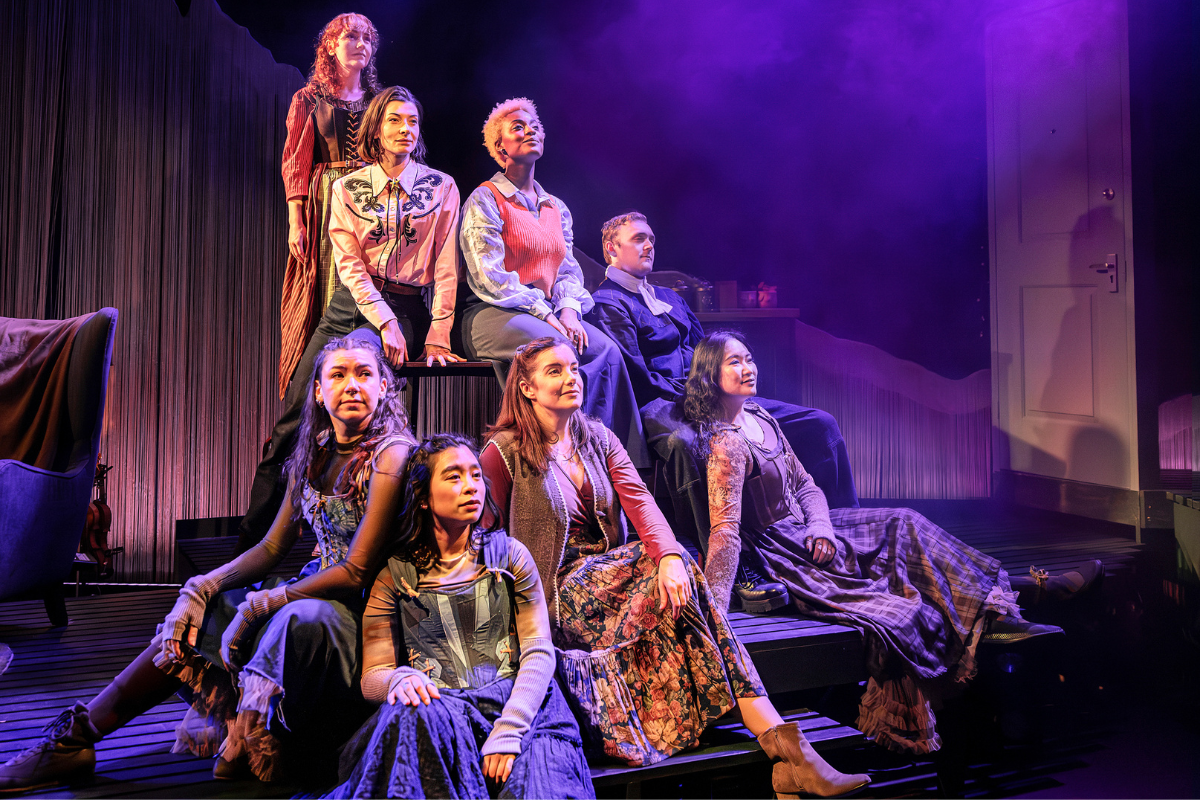
Ballad Lines at Southwark Playhouse Elephant arrives with impressive vocal firepower and admirable ambition. The production falters, however, when its songs struggle to match the emotional weight its story demands.
This folk musical from Finn Anderson and Tania Azevedo spans three centuries, connecting women through bloodlines and ballads. In present-day New York, Sarah receives a box of cassette tapes from her late Aunt Betty, who narrates the stories of their female ancestors. We meet Cait, a minister’s wife in 17th-century Scotland wrestling with an unwanted pregnancy, and Jean, a spirited Irish teenager five generations later who boards a ship for America carrying her own unborn child. Sarah, a queer woman who has severed ties with her West Virginian folk roots, must now confront her family history and decide whether she wants motherhood herself, a question that threatens her relationship with her partner Alix.
The production wears its themes openly: women’s bodily autonomy, the immigrant journey from Scotland through Ireland to Appalachia, and how traditional ballads preserve the voices of those who came before us. Anderson’s score blends Scottish, Irish, and Appalachian folk traditions with contemporary musical theatre styles, performed by a four-piece all-female band led by music director Shonagh Murray. The harmonies are exceptional. When the full company gathers for an a cappella number opening the second act, the theatre briefly feels transported to a ceilidh. Individual songs like “The Four Marys,” “Chosen Family,” and “Red Red River” showcase Anderson’s melodic gifts and the cast’s considerable vocal abilities.
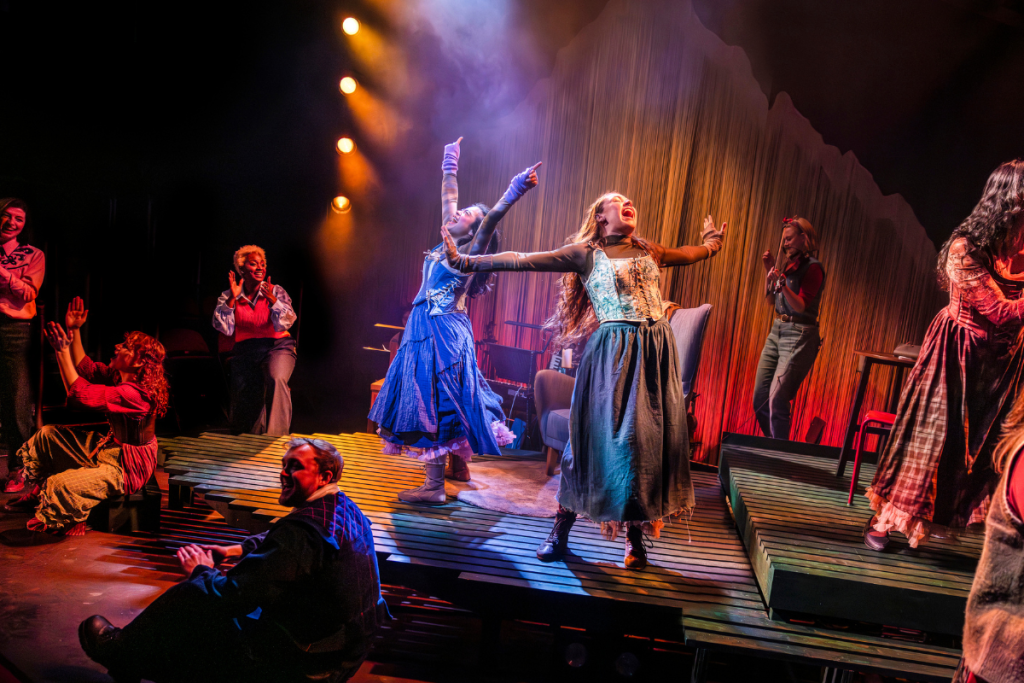
Yet for all their beauty in isolation, these songs rarely dig beneath the surface to find the devastating emotional core the story requires. The show positions itself alongside works where death and loss shatter audiences, but the material lacks that penetrating power. The writing keeps sentiment at arm’s length, favouring poetic abstractions about time and memory over visceral human connection. Dialogue stumbles into clunky territory with lines like “time started closing in, as it always does”. At two hours and twenty-five minutes, the pacing sags, particularly in the final act where the message arrives heavily underlined rather than earned through dramatic action.
The book, co-written by Anderson and Azevedo, struggles to serve its eight-person cast equally. Alix exists primarily as comic relief and eventually as an obstacle to Sarah’s maternal desires, but we learn almost nothing about her as a person. Sydney Sainté brings warmth and assurance to the role, making you wish the character had been given more dimension to work with. Betty similarly feels underwritten despite her crucial function as narrator, though a late flashback revealing her fraught history with Sarah suggests a richer backstory that never quite materialises. The ancestral stories of Cait and Jean prove more engaging than the contemporary narrative thread, leaving the present-day material to feel comparatively thin.
What saves the evening is the ensemble’s commitment and skill. Frances McNamee anchors the production as Sarah, delivering consistently excellent vocals and bringing genuine compassion to a character whose journey could have felt more fully realised. When she explores the cassette tapes in her new apartment, McNamee locates quiet moments of recognition that almost compensate for the script’s reluctance to probe deeper into Sarah’s psyche.
Kirsty Findlay brings steel and vulnerability to Cait, particularly in the first act closer “Words Are Not Enough,” where her voice fills the small space with genuine ache. Yna Tresvalles captures Jean’s teenage fire and wit, though the narrative doesn’t give her story the space it deserves. Rebecca Trehearn deploys her reliable vocal strength as Betty, elevating what amounts to a plot device into something approaching a flesh-and-blood woman. Ally Kennard handles multiple male roles with empathy and clear differentiation, a necessary counterweight in a predominantly female cast. Gracie Lai makes a strong impression as healer Morna, and Siân Louise Dowdalls contributes moments of earnest comedy as Shona.
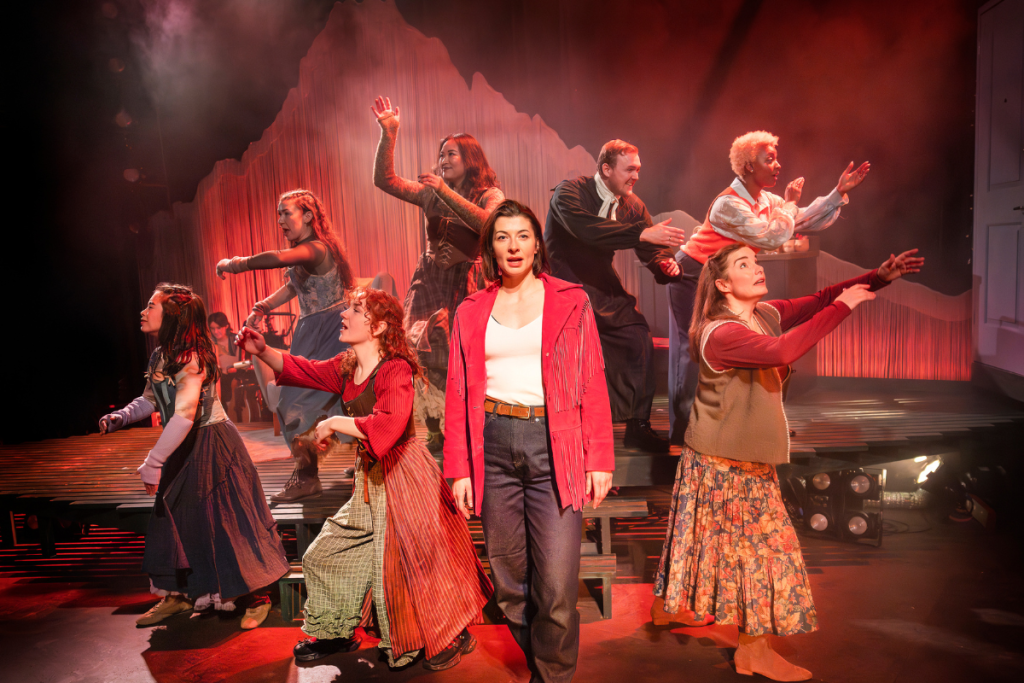
The creative team makes thoughtful use of Southwark Playhouse Elephant’s intimate space. Tania Azevedo’s direction includes inventive flourishes: a blanket transforms from swaddled baby to hungover woman’s cocoon, and a striking sequence involving tangled cassette tape creates a visible manifestation of bloodlines stretching across time. Tinovimbanashe Sibanda’s choreography flows beautifully with the music, though the cramped stage occasionally hampers the movement. TK Hay’s minimalist set features a two-tiered platform representing Sarah’s apartment, with a beaded curtain hanging overhead to suggest both mountain ranges and ancestral legacy. Simon Wilkinson’s lighting and Andy Johnson’s sound design work in tandem to evoke intimacy and scope, though at times the underscoring drowns the lyrics.
The production evokes obvious comparisons with shows like Hadestown and Come From Away in its use of folk traditions to explore larger themes. Those works, however, found ways to make their universal stories feel urgent and immediate. Ballad Lines remains somewhat at a remove, asking you to admire its construction rather than lose yourself in its emotional landscape.
The show’s heart is solid gold, to borrow a phrase from its own material. Anderson’s musical language demonstrates genuine promise, and the cast delivers performances that exceed what the book provides them. With continued development and a willingness to excavate deeper into its characters’ inner lives, this could become something remarkable. For now, Ballad Lines offers a professionally crafted evening of theatre with exceptional singing, even if the emotional throughline doesn’t quite fulfil the promise of its premise.