

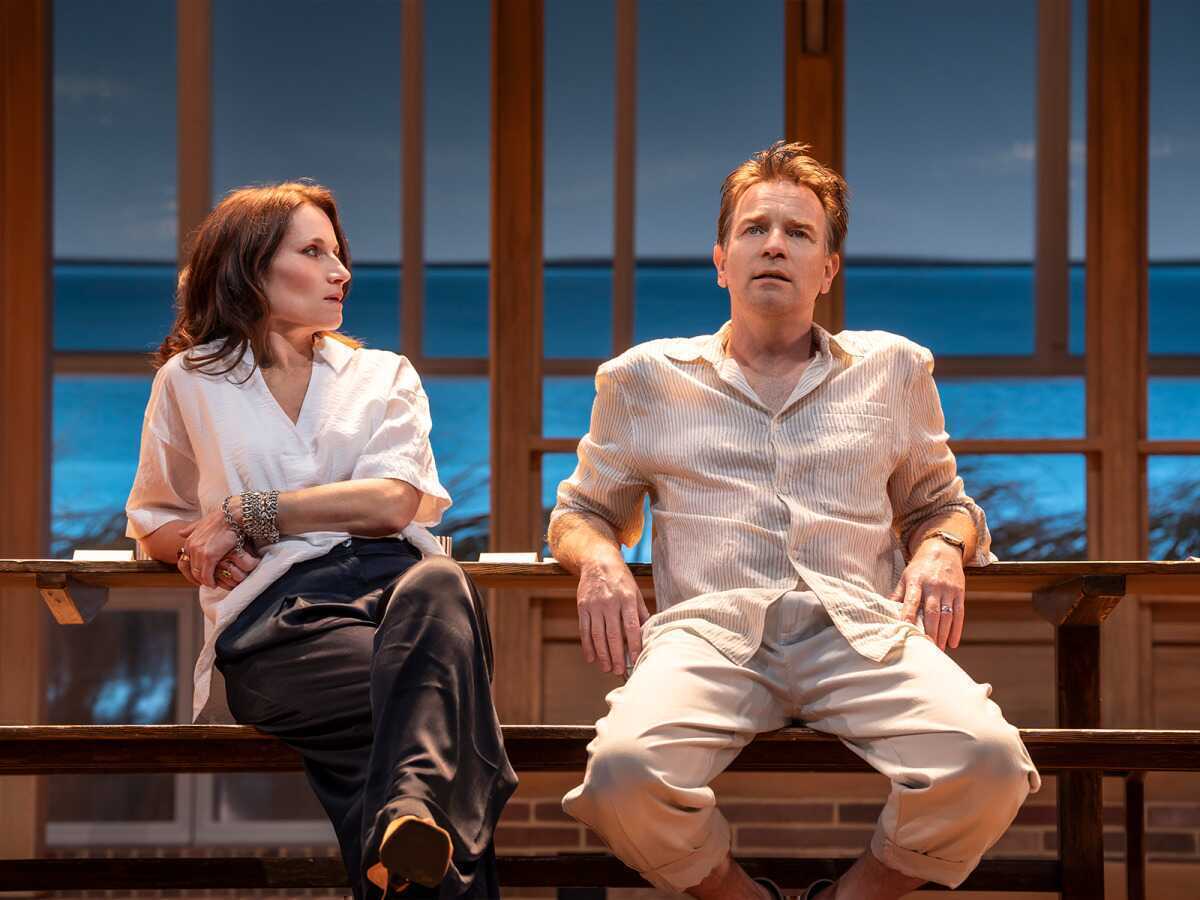
Talk about a star-studded cast. This ambitious reimagining of Ibsen’s The Master Builder shifts the story to contemporary America and, crucially, centres on the women who orbit the title character. Playwright Anna Raicek keeps the bones of the original, but transplants them into a sleek modern drama that speaks to the #MeToo era and the cult of male genius.
You meet famed architect Henry Solness (Ewan McGregor) on what ought to be his crowning day. A decade after a fire claimed both a church and his child, he is opening a gleaming new building on the same plot, a monument to his talent and, perhaps, his guilt. His publisher wife Elena (Kate Fleetwood) has planned a celebratory dinner, though her bright hostess smile masks a simmering rage. The guest list is a minefield. There is Hilde/Mathilde (Elizabeth Debicki), a journalist once mentored and, it is hinted, seduced by Henry in the aftermath of tragedy. There is Ragnar (David Ajala), the protégé Henry has kept on a tight leash lest a younger rival eclipse him. And hovering at the edges is Kaia (Mirren Mack), Elena’s put-upon assistant with her own quiet ambitions. Over the evening wine flows, long-buried secrets surface, and every relationship is redrawn.
Raicek scatters the plot across two brisk acts. Early conversation about the new building doubles as revelation: the centre’s soaring chapel roof resembles the church that burned, a deliberate provocation from Henry that opens old wounds. Elena’s casual mention of divorce papers lands like a grenade, while a throwaway line about Hilde/Mathilde’s forthcoming profile of Henry hints at agendas within agendas. Later, as dusk bleeds into night, a dinner-table clash lays bare the affair Henry still refuses to name. Elena’s challenge is not just betrayal but erasure: she has spent ten years nursing grief while her husband rebuilt his legend stone by stone.
The performances power the evening. Kate Fleetwood gives a scorching turn, every flick of her gaze suggesting pain held so long it has hardened into armour. She glides around the stage in flowing silks, smile razor-thin, and when the mask drops you feel the temperature plummet. Her long monologue midway through act two, part confession and part indictment, earns breath-held silence followed by a collective exhale. Elizabeth Debicki, statuesque in cool metallic gowns and looking nothing like Princess Diana, plays Hilde/Mathilde as a woman who has learned to weaponise calm. She listens more than she speaks, yet one lift of an eyebrow can halt the party dead. She is neither victim nor femme fatale but something knottier, a survivor measuring the cost of speaking out.
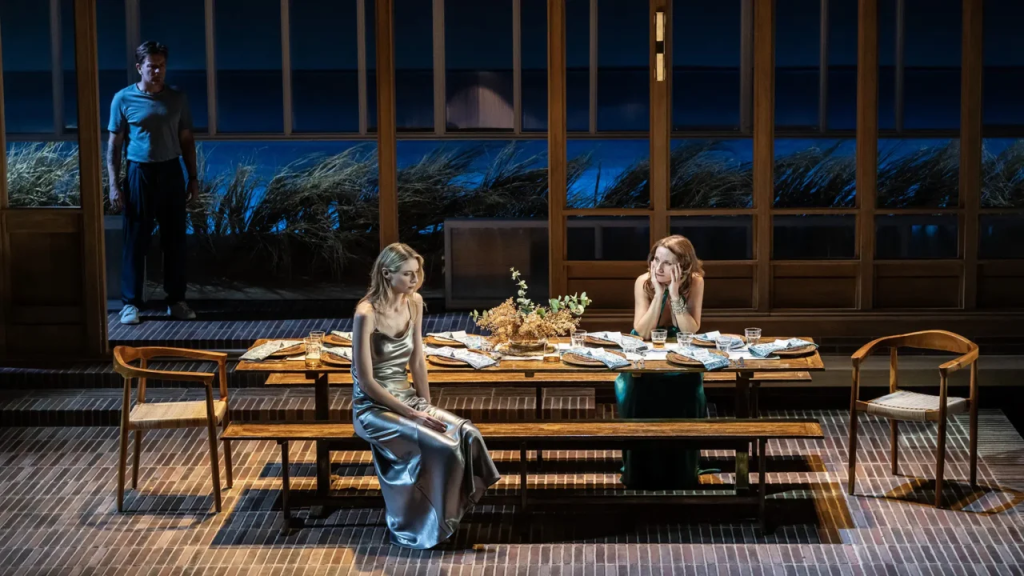
Ewan McGregor’s Henry is more equivocal. The actor’s trademark charm gives Solness an approachable glow that sits oddly against the character’s darker impulses. At times you long for sharper edges, yet when he recounts the moment he felt his talent sing in the flames, the line lands with a shiver. Ajala, meanwhile, steals scenes as Ragnar, swaggering round the deck in linen shirts and gentle mockery. His easy grin exposes the hollowness of Henry’s self-mythologising. Mirren Mack provides deft comic release, turning Kaia’s acerbic asides into barbed commentary on workplace hierarchies.
Theme is where the production feels most modern. In Ibsen, Hilde is a whimsical muse; here Mathilde is a woman reckoning with an imbalance of power, echoing real-world headlines. Elena, too, refuses the passive wife trope, confronting both husband and interloper on her own terms. The play asks uneasy questions: when does mentoring tip into exploitation, and who owns grief, those who suffer publicly or those who suffer longest?
Not every risk pays off. The American setting, complete with East Coast accents, occasionally clashes with dialogue that still bears Scandinavian bones. The famous ending, Henry’s fatal climb, feels rushed, less catharsis than cliff-edge snapshot, so audience members unfamiliar with the source may leave puzzled. McGregor’s mellow delivery sometimes undercuts the script’s vicious undercurrents, muting the danger that should make the final ascent truly perilous.
Yet the evening lingers. Partly that is down to Fleetwood’s volcanic performance; partly it is Raicek’s determination to explode patriarchal myths without turning the women into saints. You leave debating where sympathy should lie. Was Mathilde complicit? Did Elena’s pursuit of vengeance destroy any chance of reconciliation? Does Henry deserve pity for a grief that cannot be expressed except through grand designs?
For younger audiences, the Instagram generation embodied by Ragnar may be the draw; for older viewers, McGregor’s film-star wattage and Fleetwood’s stage pedigree promise quality. Crucially, the show is talkable. Over interval ice-cream you will trade theories; in the pub afterwards you will argue over motives. That conversation is the mark of theatre doing its job.