

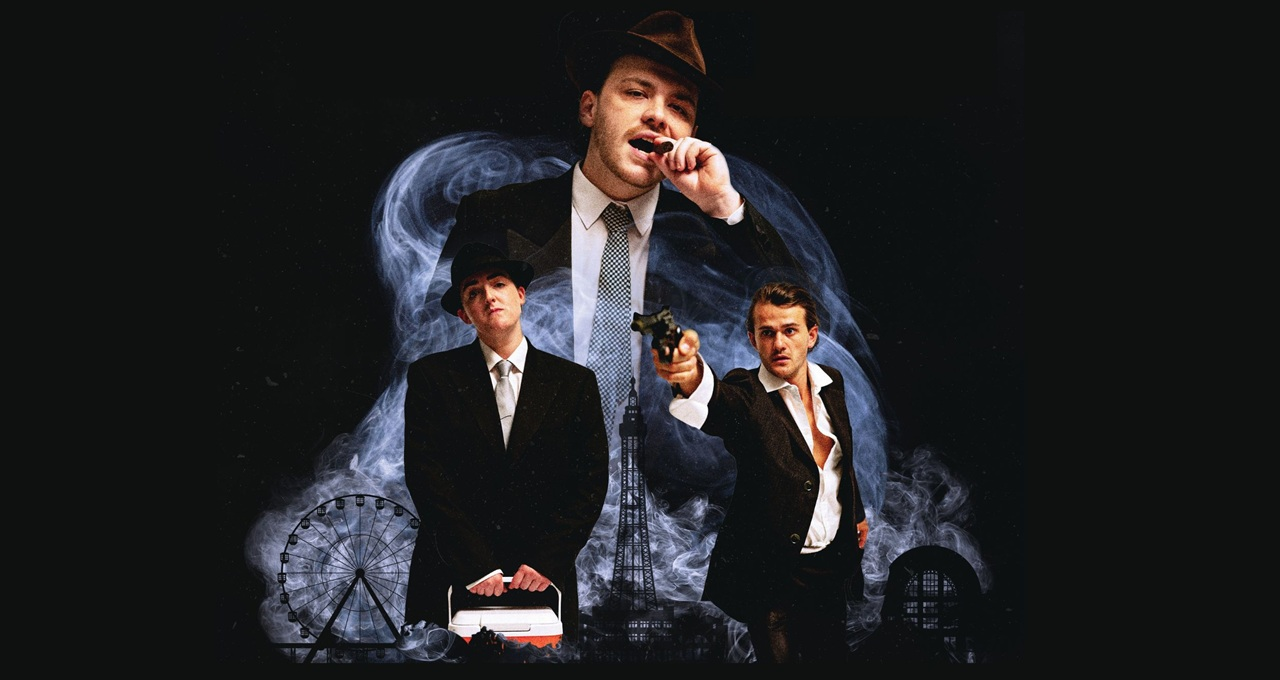
This show is a slapstick-mobster ride set in 1945 when the Sicilian emigrant Don Lambrini accidentally boards a cruise ship bound not for America but for Blackpool. From there he builds a dodgy waste-management empire and soon his sons Jack Lambrini and Al Dente squabble over succession. After a bullet-rich funeral moment the action shifts northwards to seedy seaside nightclubs and seaside gangster showdowns. Amid the nonsense there is a rival gang headed by the dubious Fray Bentos.
The show doesn’t promise subtlety and wholly honours that commitment. It looks loud and zany at first glance yet the emptiness underneath arrives quickly and never leaves. This reviewer did not believe this new Riverside Studios revival of The Bang Gang deserves your time or your money.
The actors shout a lot about family and honour and legacy while the low stakes plot drifts between pier bars and cheap midnight clubs and gated back rooms that hold supposed secrets. The jokes pile up without flow and you want the material to slow down so you can stay with one idea and watch it change.
Fred Trenholme plays both Don Lambrini and the rival Fray Bentos. There is supposed to be a sly mirror effect between mob king and gang foil. In practice you hear the same aggressive rhythm in each line. He leans forward and narrows his eyes for menace then repeats it again three beats later. The physical force of his performance gives you volume but no inner logic so the story stays flat. Fabian Bevan as Jack Lambrini walks in nervous circles when he enters a scene. Hannah Johnson as Al Dente finds one dry comedic cadence early and she never changes pressure even when the script implies she has grown tired of the family grind.
The writing tries to argue that wild ambition and strange geography in a post war moment change how we see identity, yet the show dodges the deeper idea. One short riff on how people can fail upwards could have landed with force if the scene then took a breath and gave you consequences. Instead it leaps to another (unfunny) gag. The writing keeps jumping without guiding your attention. As a result the audience cannot connect threads.
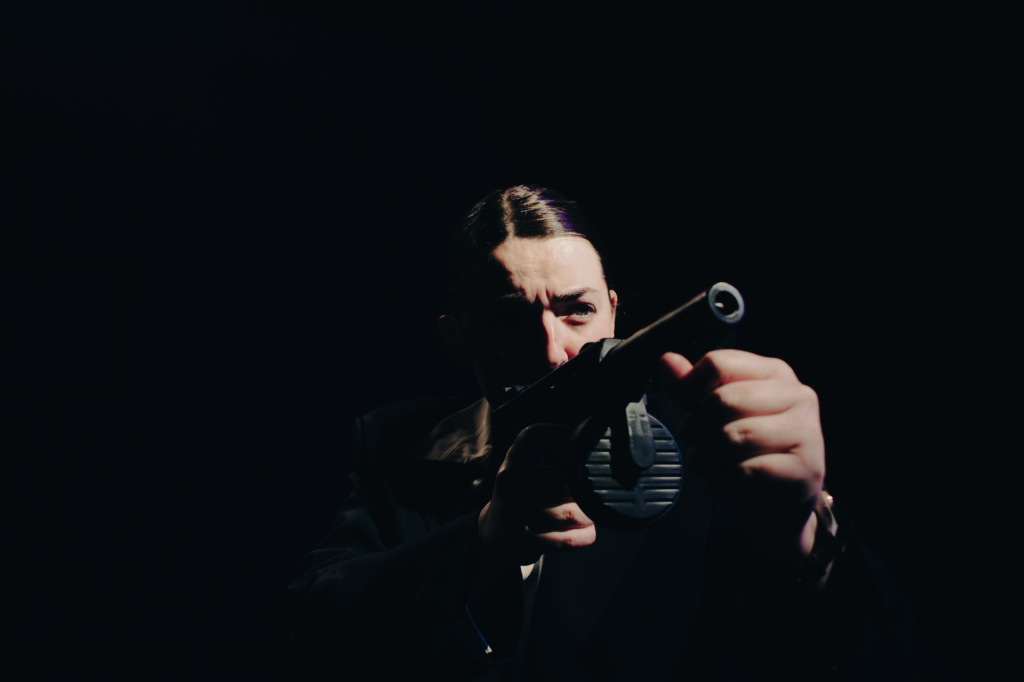
Some early fringe stagings gained a cult following because they were inventive in small rooms where you could watch an actor choose to crack or hold a silence for three seconds and change the room temperature. This Riverside revival has more resources yet the extra space makes the thin material more obvious. You could say that the upgrade is like swapping a small rough comic for a giant glossy poster of the same comic. The polish hides nothing. Still the performers seem to believe that sheer speed wins. This is a category error. Audiences do not mistake continuity for depth.
In the present moment there is cultural interest in migration, displacement, and who controls the narrative of success. A Sicilian mobster forced to invent himself in a British seaside town could say something about who writes the story of economic advancement once you move across borders. You see glimpses of this in the speeches about building a business from scrap metal and local trash contracts. You also see a hint of resentment when Jack talks about how the town does not want them. Yet this thread disappears the moment a cheap gag arrives.
Some people who enjoy anything loud may still have a decent night. They may laugh because volume feels like a party trick. You who want more than frenzy will likely spend your time counting beats. The idea of chaotic mobsters is a fun idea, but it is executed poorly. If you value shape, nuance, and a joke that grows from character, avoid this show.