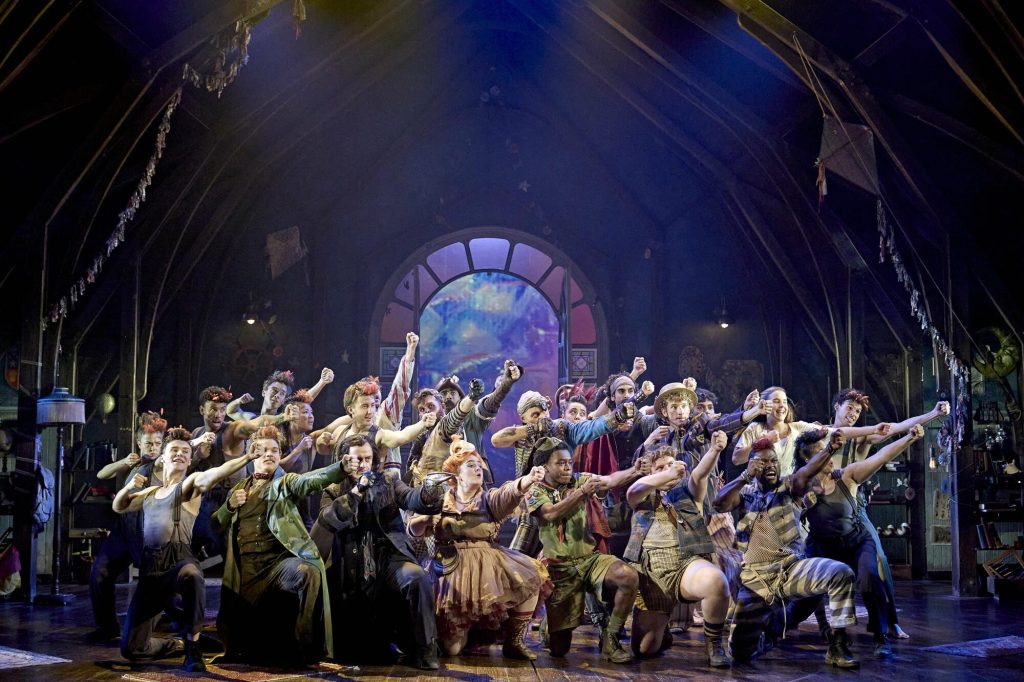
Wendy & Peter Pan at the Barbican Theatre is a fairytale full of sword-play, flying figures and glittering waves of light. By and large it delivers what you might reasonably expect of a festive adventure, but the emotional ground it tries to cover proves uneven. It thrills, it jolts, but it never quite soars.
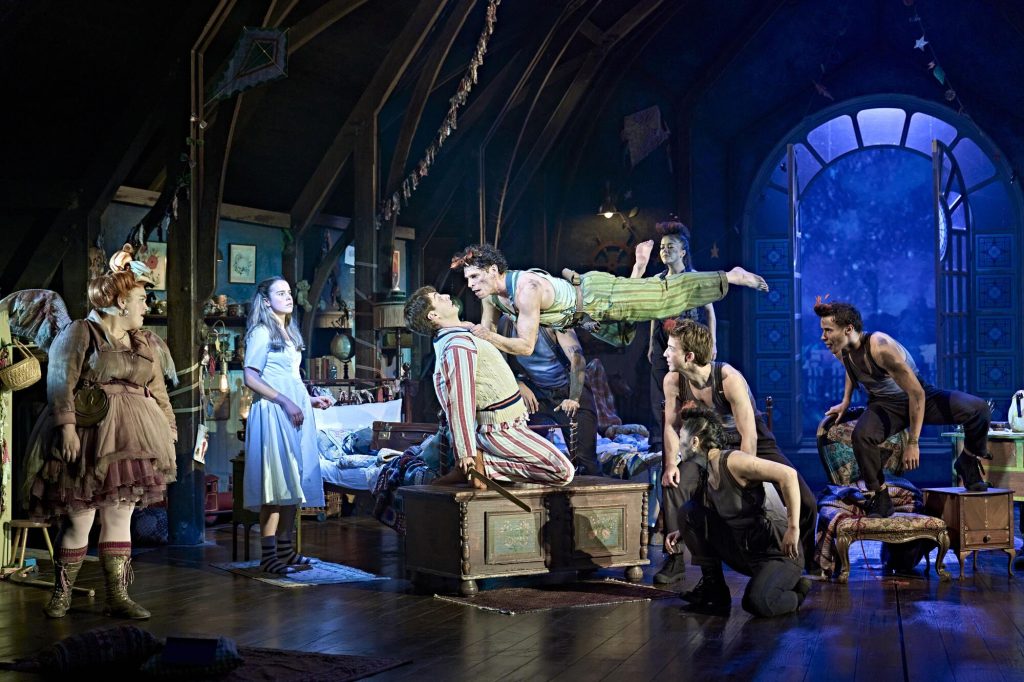
This is a play in genre: adventurous family theatre with a modern twist. Written by Ella Hickson, directed by Jonathan Munby, with design by Colin Richmond and lighting by Oliver Fenwick. The cast includes Hannah Saxby as Wendy Darling, Daniel Krikler as Peter Pan, Toby Stephens doubling as Mr Darling and an unrecognisble Captain Hook, and Lolita Chakrabarti as Mrs Darling. The story wanders from the safe nursery of the Darling children, through skies and seas, to a version of Neverland where the Lost Boys, the pirates and the shadows of childhood meet.
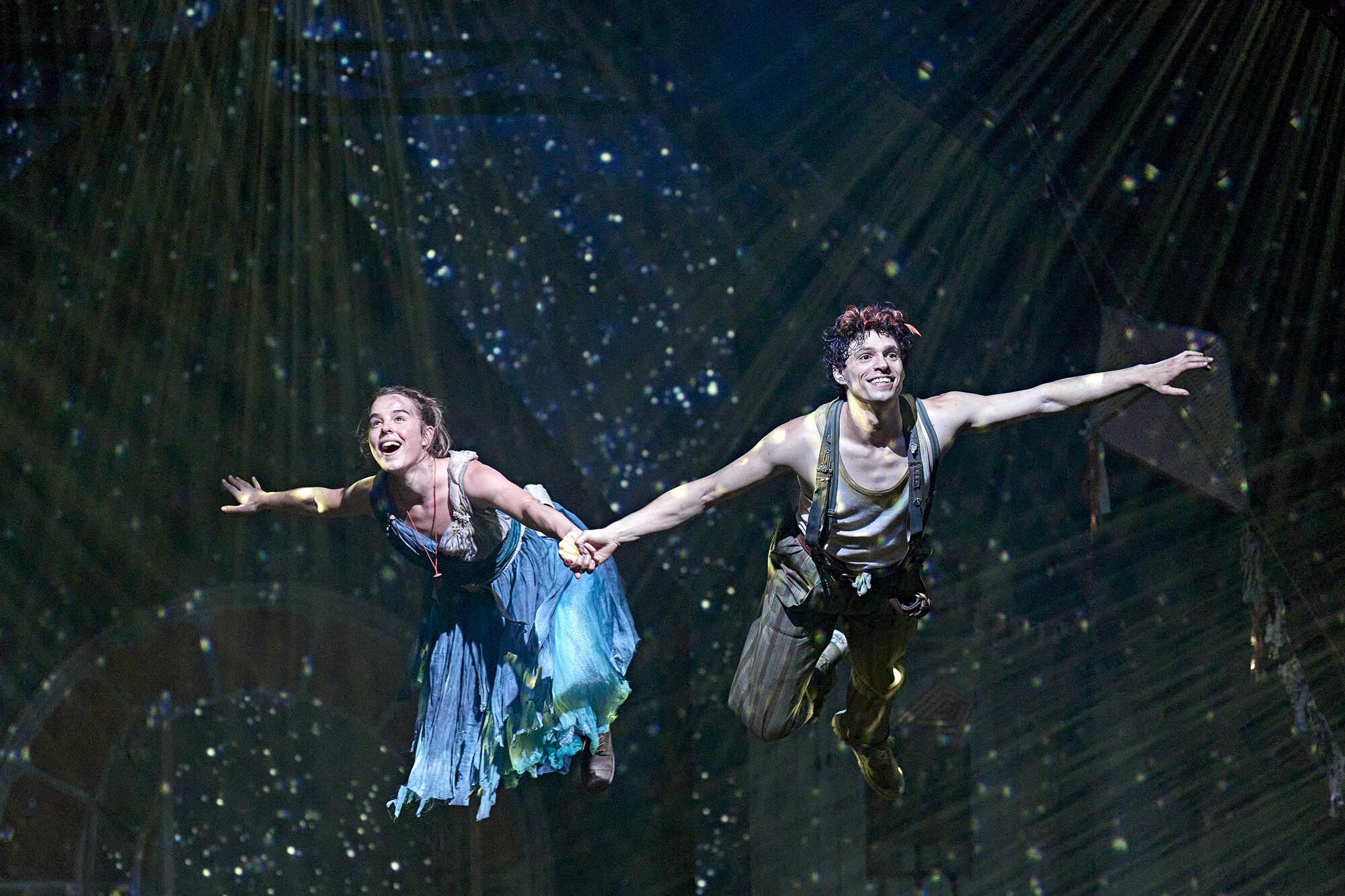
Early on we see Wendy refusing to remain in the nursery and instead being swept away by Peter. Later, at roughly the mid-point in Neverland during the pirate assault, she takes a sword into hand. And in the final third she glides above the stage in full flight when she finally claims her agency. These three moments give a good sense of how the piece tries to shift the centre of the story. The familiar premise remains, children leave home, fly, meet pirates, but the emphasis changes: here Wendy is not simply caretaker of boys, she seeks something for herself. For example, the addition of a ‘lost brother’ subplot (Tom) gives her a personal quest rather than only a maternal role.
Hannah Saxby’s Wendy is measured and strong-willed. She holds the stage in the flying sequence with genuine calm, and has a quieter power than many Wendys. Daniel Krikler’s Peter is energetic and limber: he throws himself into aerial work and physical play, but his Peter is perhaps too adolescent, his wildness sometimes reads as thin rather than enigmatic. Toby Stephens treats Hook/Mr Darling with relish: his Mr Darling’s polite veneer cracks into Hook’s darker swagger; the dual casting works to underline the link between childhood neglect and adult menace. Lolita Chakrabarti’s Mrs Darling has fewer scenes, yet she brings a grounded intelligence, especially when the play shifts to ideas of autonomy for her character.
On the writing and staging front the play tries to say something about growing up, loss and change. The shifts in emphasis, Wendy rather than Peter, grief rather than carefree flight, are welcome. But at times the narrative feels overburdened: there are many sub-plots, a large ensemble of ‘Shadows’, and extended action sequences that slow momentum. In one pirate duel sequence, the choreography is thrilling but the thematic point gets lost in the flurry of swords. By contrast, the flying scene near the end gives the emotional lift that the play aims for. Design‐wise, Colin Richmond’s set is a delight, a toy-box turned tempest, and the lighting/video design beautifully evokes waves and sky. The music by Shuhei Kamimura adds energy though in some scenes it feels overly busy and generic. Costume and stage detail do much to decorate the world, but decoration doesn’t always equal emotional depth.
Meanwhile the theme of female agency and re-thinking gender roles is central: Wendy rejects the automatic ‘mother’ role, Mrs Darling hints at suffrage and Peter’s sexual curiosity unsettles the ‘boy who never grew up’ myth.
The children will have a good time. But adults looking for a lean, emotionally razor-sharp retelling for a bit of nostalgia will find it a bit up in the air.