


This revival of J.B. Priestley’s When We Are Married at the Donmar Warehouse proves you don’t need a certificate to make a marriage work. Donmar artistic director Tim Sheader’s production finds real warmth and bite in a 1934 comedy that could easily have felt like a dusty period piece.
Three Yorkshire couples gather to toast their silver wedding anniversaries with champagne and smugness. Joseph Helliwell (John Hodgkinson), an alderman who built his fortune in textiles, hosts the evening alongside his wife Maria (Siobhan Finneran). Councillor Albert Parker (Marc Wootton) booms about respectability whilst his wife Annie (Sophie Thompson) stays quietly miserable. Herbert Soppitt (Jim Howick) twitches under the thumb of his domineering spouse Clara (Samantha Spiro). The men have prospered. The women have endured. Then Gerald Forbes, a new church organist from down south, delivers news that punctures their entire world: the clergyman who married them twenty-five years ago wasn’t properly licensed. Legally, they’ve been living in sin. Housekeeper Mrs Northrop (Janice Connolly) spreads the gossip with glee. A drunken photographer from the Yorkshire Argus stumbles in. Joseph’s former lover from Blackpool arrives at the door. The evening spirals into chaos, and the couples must reckon with what they’d buried under a quarter-century of habit.
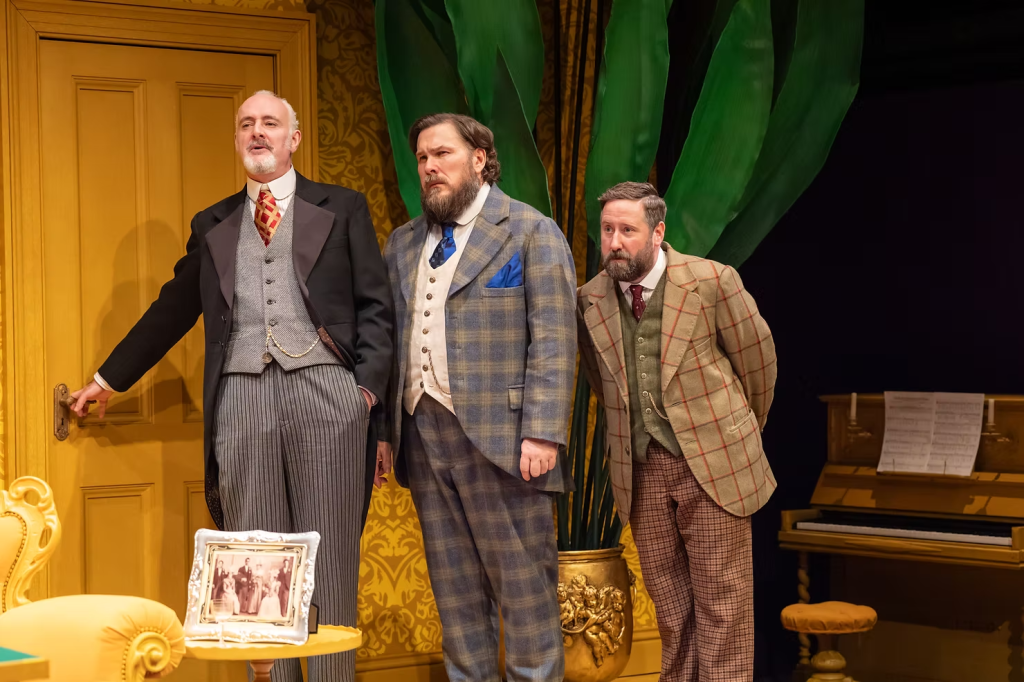
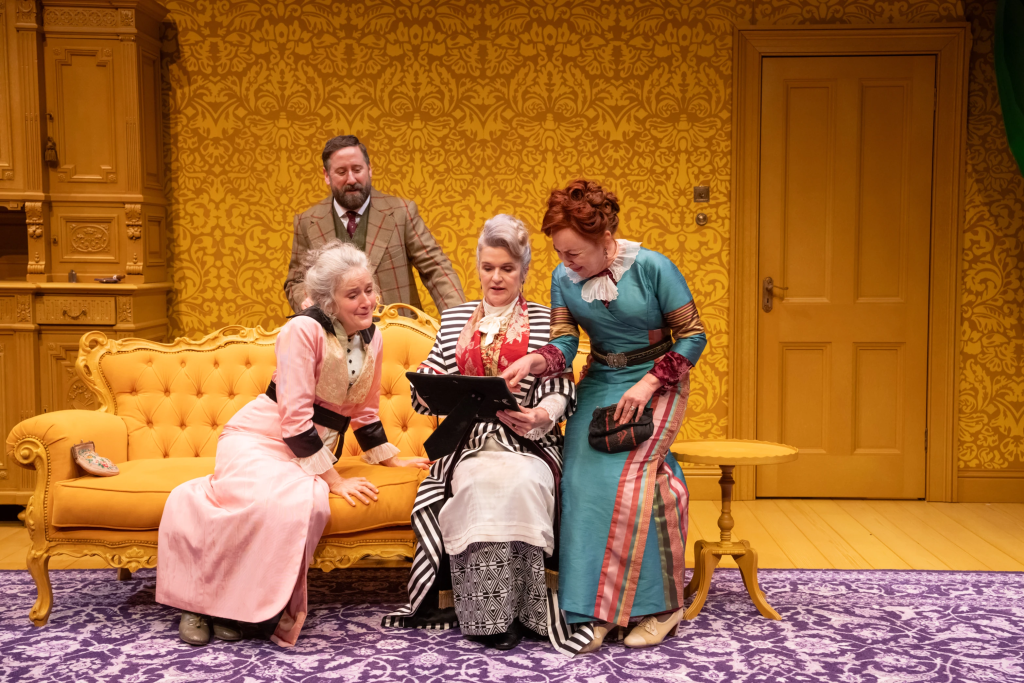
Sheader keeps the production moving at pace but never rushes the character work. Each act opens with a music hall number that sets the tone, but he saves his sharpest theatrical flourish for the moment when the wives realise their technical freedom. Between acts, he drops in a burst of Beyoncé’s ‘Single Ladies’, and it detonates like a grenade in a tea shop. Peter McKintosh’s set is a blinding wash of mustard yellow, with flocked wallpaper and an absurdly oversized aspidistra that broadcasts middle-class pretension. Anna Fleischle’s costumes are beautifully detailed without drawing attention to themselves.
Sophie Thompson anchors the production as Annie, who discovers her voice as the show progresses. She listens to Albert’s blustering self-justification with a beatific smile, then responds with timing so precise it reverses his meaning entirely. Thompson’s face registers every tremor of feeling. Siobhan Finneran gives Maria weight and dignity even as she confronts Joseph’s infidelity, her offer to hand over the house keys to his mistress played with controlled fury rather than melodrama. Samantha Spiro makes Clara genuinely frightening in her desperation to maintain control, terrified of losing the grip she’s held for decades.
Among the men, John Hodgkinson captures Joseph’s weary acceptance that his success rests on Maria’s labour whilst he’s enjoyed seaside escapes. Marc Wootton leans into Albert’s pomposity, wearing his title like military honours, but the performance occasionally tips too far into caricature. Jim Howick charts Herbert’s liberation with sudden physical twitches and nervous adjustments as he realises he might finally assert himself. Janice Connolly steals every scene as Mrs Northrop, weaponising gossip with working-class glee. Ron Cook’s photographer Henry Ormonroyd grows steadily more intoxicated through the evening, his slide from the sofa a perfect piece of physical comedy. Tori Allen-Martin brings surprising warmth to Lottie, the woman Joseph promised he’d marry if he were free, giving her emotional heft rather than playing her as a cartoon.
Priestley wrote the play in 1938 but set it thirty years earlier, giving him distance to satirise Edwardian hypocrisy. The structure is ruthlessly efficient. No word is wasted. Every revelation lands with farcical precision. But the jokes about bullying husbands and nagging wives can feel repetitive, and some of the gender stereotypes play as basic rather than subversive in 2025. The comedy leans heavily on class distinctions and Yorkshire pride, where terms like “swank” and “la-di-da” mark characters as respectable or suspect.
Still, the play’s central argument cuts through: marriage as legal contract rather than emotional bond. The couples built their status on a bureaucratic error, and when that foundation cracks, they’re forced to confront what actually holds them together, if anything. The ending arrives too neatly, with problems resolved through coincidence and a clergyman’s sudden helpfulness, but the first 90% of the play is the chaos you came for.
Sheader’s blocking uses the Donmar’s intimacy well, keeping the small space active with entrances and exits that stir fresh energy into each scene. The Donmar seats just 251 people on three sides, and you’re close enough to see every flicker of expression. Will Stuart’s original music accompanies the music hall songs without overwhelming them. Fergus O’Hare’s sound design delivers one sudden flash of light and a few moments of loud music, but otherwise stays understated.
You’ll like this if you respond to ensemble comedy that values timing and character over one-liners, if you enjoy seeing pomposity deflated, or if you’re drawn to period farce that doesn’t apologise for its theatrical roots. You won’t like it if you need comedy that feels urgent and contemporary, if repetitive gender dynamics grate on you, or if you prefer plays that earn their happy endings rather than tying them up with convenient reversals. This is entertainment that knows what it is and delivers it with skill and warmth, a production that finds the humanity underneath the farce.