

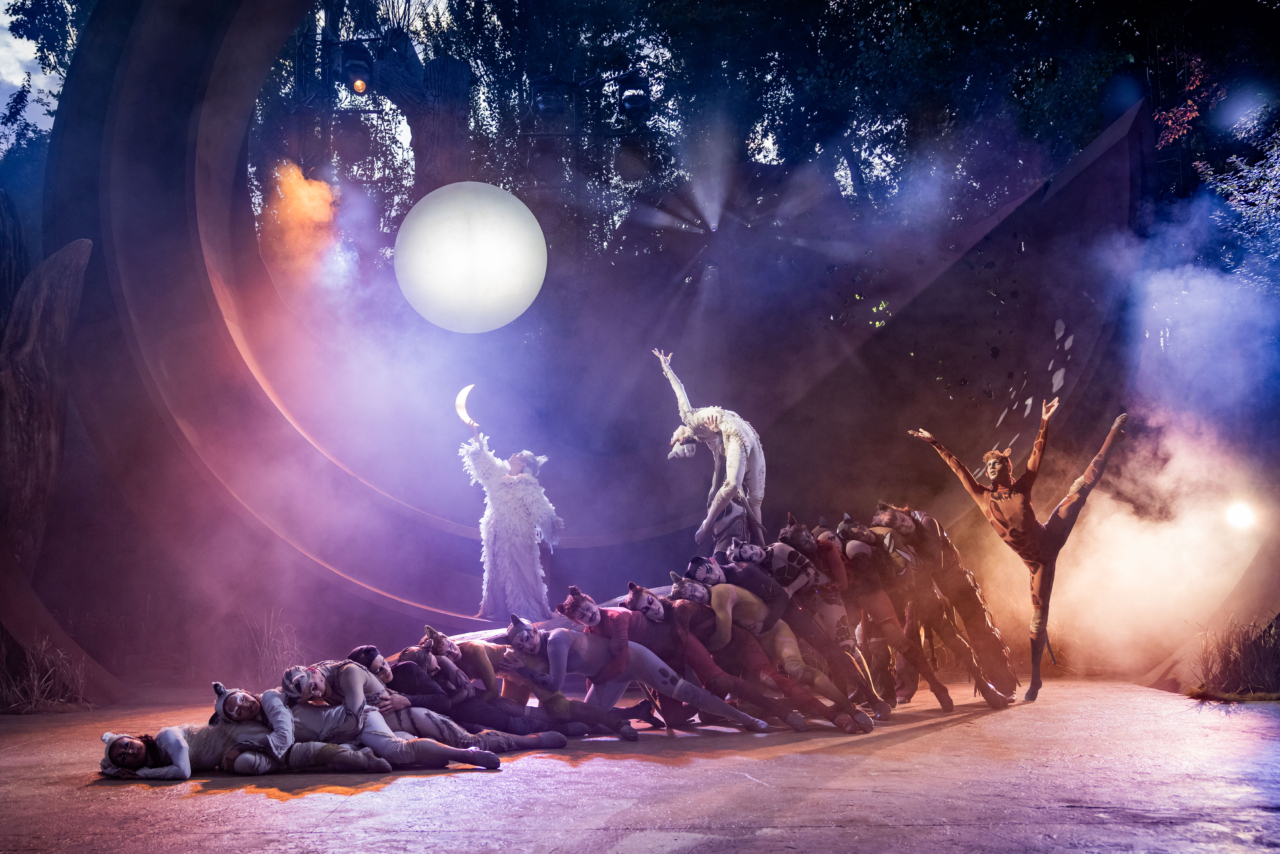
Cats has spent the better part of a decade as everyone’s favourite punchline, largely due to that film. Drew McOnie’s revival at Regent’s Park Open Air Theatre is the correction we needed: sharper, whimsical, and just lovely to watch.
Adapted from T. S. Eliot’s 1939 poetry collection Old Possum’s Book of Practical Cats, the show barely counts as a book musical. One midsummer night, a tribe of cats gathers for the Jellicle Ball, an occasion whose entire dramatic purpose is to let their patriarch, Old Deuteronomy, pick a single cat to ascend to a new life. That’s the whole plot, and every named cat exists purely to make their case in song.
What follows is a fashion parade of song and dance. Elliot Broadfoot plays Bustopher Jones with unforced comic relish, sauntering through his own tribute to gluttony as though the character had never heard the word Mounjaro. Gary Wilmot gives the old theatre cat Gus a rueful, sagging dignity, mourning past glories with the specific sorrow of a cat who once had star billing. Danny Nattrass and Briana Craig turn the thieving double act of Mungojerrie and Rumpleteazer into the evening’s sharpest piece of comic choreography, all synchronised mischief and split-second timing. None of it builds towards anything beyond itself, and remarkably that stops mattering almost immediately, because every vignette is its own mini-show.
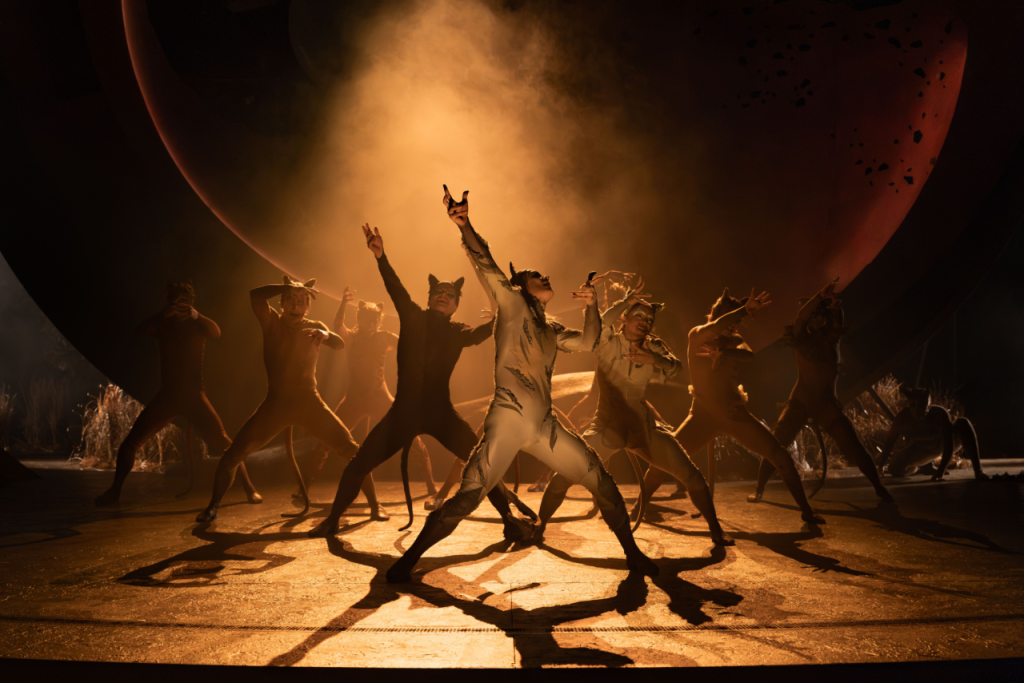
The setting does a great deal of the emotional work here, and I’ll admit that no amount of preparation quite readies you for the moment Regent’s Park finishes its own scene change – dusk. Sami Fendall’s set, a cracked metal crescent rising out of scrub and shadow, looks handsome but slightly inert while the sky is still light; once darkness properly falls, Jessica Hung Han Yun’s lighting turns it into the production’s real star turn, throwing amber and violet across the company as the promised moon finally earns its billing. Few Open Air Theatre shows have made such deliberate use of the venue’s own nightfall as a structural device.
McOnie, fresh from reinventing both Jesus Christ Superstar and Brigadoon, discards Gillian Lynne’s original choreography almost entirely and replaces it with something closer to contemporary ballet crossed with street dance, most gloriously in Mr Mistoffelees, where Jet Yau’s solo turns a novelty number into a genuine showstopper. It’s a braver call than it sounds. Lynne’s original vocabulary defined the show’s identity so completely that abandoning it risked losing the production’s soul along with its dated aerobics; instead, McOnie finds cats that still read as unmistakably feline, all coiled spines and unhurried menace, without once resembling a tribute act to 1981.
Rachael Wooding’s Grizabella is, obviously and rightly, the performance the whole evening turns on. She plays the feline outcast with almost no visible self-pity for the first ninety minutes, a choice that makes the eventual unravelling of Memory feel like release rather than demand; her voice cracks exactly once, on a phrase she has clearly chosen not to polish smooth, and the sight of the tribe finally closing ranks around her towards the end is the best-staged image of the night. Melanie La Barrie’s Old Deuteronomy anchors it all with an unforced, weary authority that never once tips into sentimentality, which is what a character this thinly written needs in order to survive.
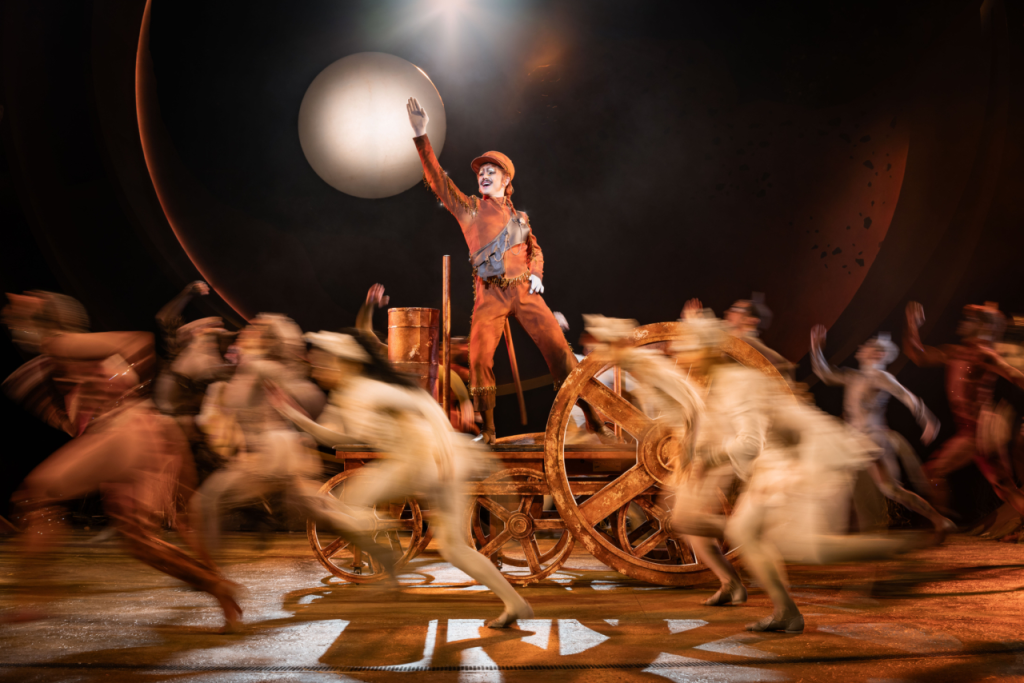
Eliot’s poems were never trying to say much beyond the pleasure of naming things, and Lloyd Webber’s score mostly follows suit: this is a show about performance and self-presentation dressed up as a musical about cats, closer in spirit to a revue than to Sunset Boulevard’s meditation on faded stardom, though Wooding’s Grizabella flirts with that comparison more than once. Where the writing runs thinnest is in the padding numbers that exist mainly to give the company something to do before the light fails; Bustopher Jones earns its laughs and little else, and the same goes for the railway pastiche Skimbleshanks, which Matthew Caputo rescues through sheer commitment rather than anything on the page.
If there’s a genuine miscalculation, it’s Rum Tum Tugger. McOnie reimagines him as a strutting seventies rock frontman, but Jaydon Vijn’s voice doesn’t quite carry the power the staging demands of him, and it’s the one number where the choreography outpaces the performer. Dianté Lodge fares far better as a genuinely unsettling Macavity, all sulphur and threat, proof that this production takes its villain more seriously than most.
None of that dents the overall verdict. The Regent’s Park run continues until 19 September, with tickets from £15 before the production heads out on a UK tour running well into next year. It’s a five-star evening for anyone who has ever loved this score despite themselves, and quite possibly for a few who never expected to; just don’t go in worried about that film, because within twenty minutes, the cat will well and truly have got your tongue about it.