

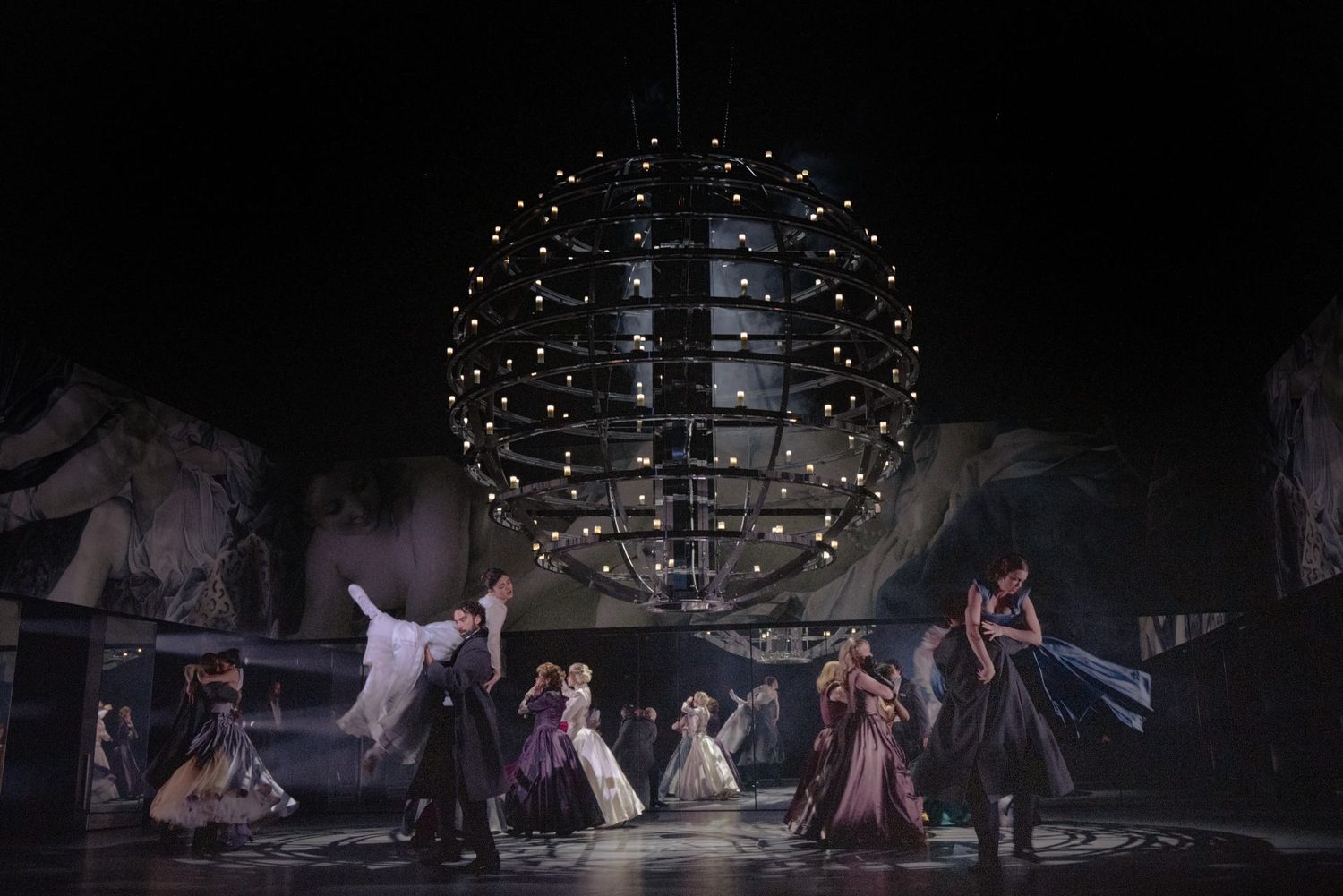
Marianne Elliott’s revival of Les Liaisons Dangereuses is a gorgeous, glittering trap, and it knows it.
Christopher Hampton’s adaptation of Pierre Choderlos de Laclos’s 1782 novel is a drama of seduction and revenge among the bored aristocracy of pre-revolutionary France, and this is, remarkably, its first outing on the National’s stage. The Marquise de Merteuil and the Vicomte de Valmont were once lovers and remain co-conspirators. Their idea of fun is a wager. Merteuil wants Valmont to despoil Cécile de Volanges, a convent girl about to marry a man who once jilted her. Valmont has already set his sights higher, on the virtuous, married Madame de Tourvel, treating her resistance as the ultimate professional challenge. What starts as sport curdles fast. Valmont’s conquest of Tourvel tips into something neither he nor Merteuil can control, and the alliance that has kept them both safely above the fray of ordinary feeling begins to crack. Cécile, meanwhile, is not merely a pawn. Hampton has sharpened her arc for this staging, and by the second act she has learned rather more from her tutors than they intended. It is a plot built on letters and lies, on reputations as currency, and on the particular cruelty of people clever enough to know exactly what they are doing to each other.
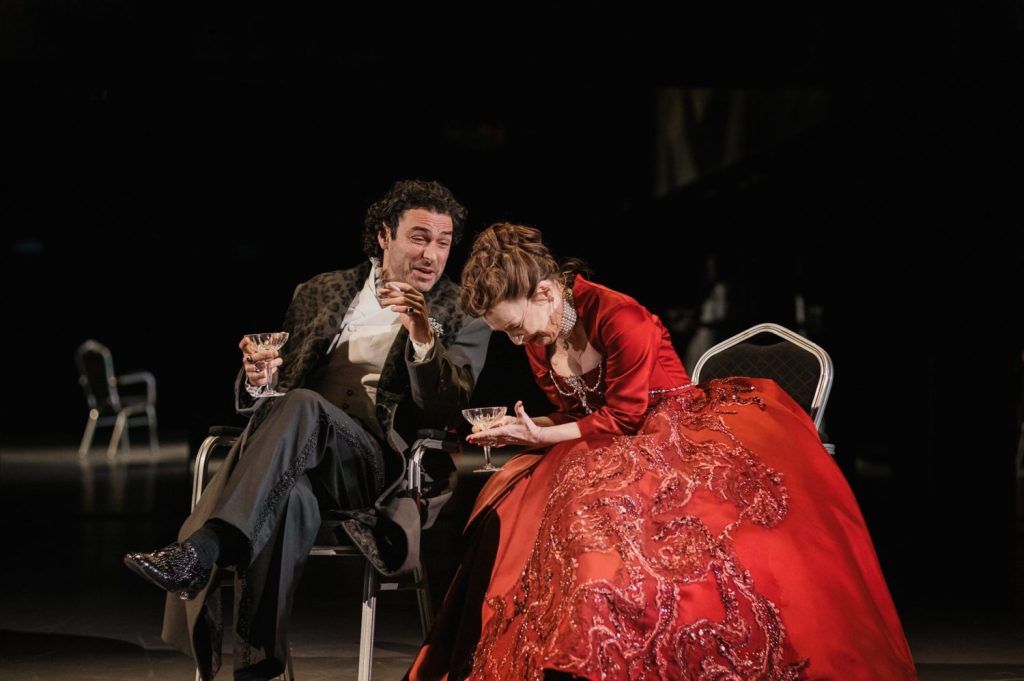
Lesley Manville’s Merteuil is the engine of the evening. She played Cécile in the play’s original 1985 production, and there is a sly, deliberate resonance in watching her now preside over the destruction of a girl not unlike the one she once was. Manville makes a specific choice worth savouring: rather than icy detachment, she plays Merteuil’s control as effortful, a mask held in place by sheer will, so that every small crack, a flicker when Valmont wounds her pride, lands with real force. Aidan Turner’s Valmont keeps his own accent and a puppyish, wheedling charm that makes his cruelty land sideways rather than head-on. It is a canny choice for the character but a slightly softer one for the play, and it means the production’s darker turns arrive with less menace than they might. Monica Barbaro, making her stage debut as Tourvel, builds her performance patiently, holding herself rigid with piety until the dam breaks, and Hannah van der Westhuysen’s Cécile transforms so completely across the evening that her final scenes feel genuinely unsettling.
Rosanna Vize’s set is one of the production’s real assets: three mirrored walls turn the audience into unwilling accomplices, catching our own faces among the candlelight whenever the cast rearrange the sparse, mobile furniture between scenes. Natalie Roar’s costumes do plenty of the storytelling too, particularly Merteuil’s blood-red gown, which announces her entrance in the opening ballroom scene before she has said a word.
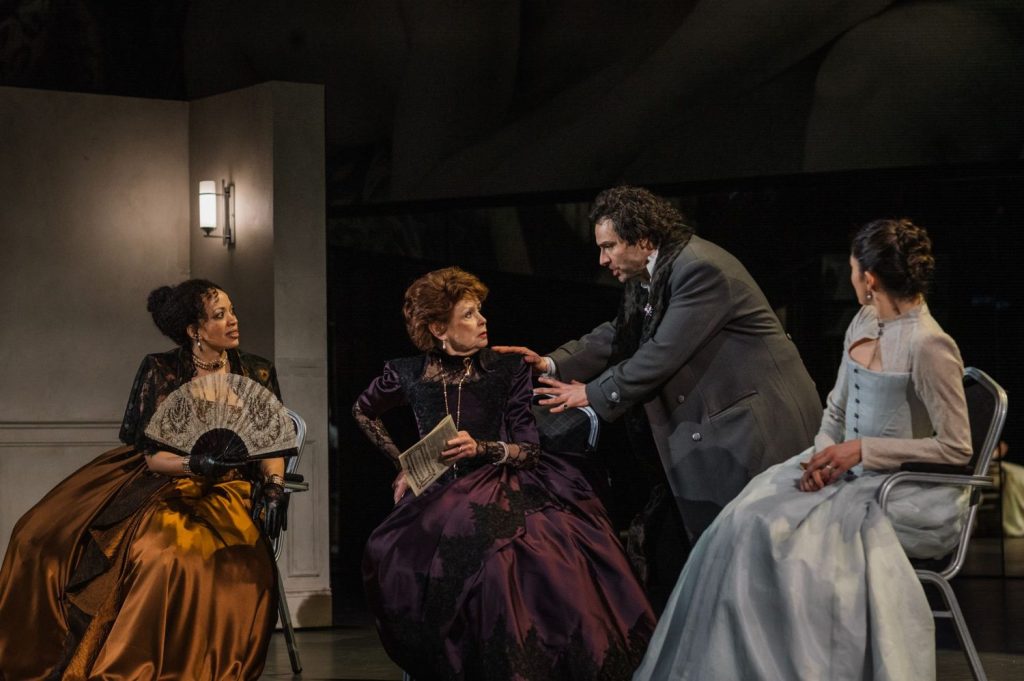
The bigger question hanging over the whole enterprise is whether this story still bites the way it did in 1985, when Alan Rickman played Valmont as something closer to reptile than romantic, or in 1988 when John Malkovich slithered his way through the brilliant film adaptation. Elliott clearly wants the production to speak to a post-MeToo audience, and there are moments, particularly around Cécile’s reckoning, where that works. But the game between Merteuil and Valmont is played here with such wit and glamour that its uglier implications sometimes get lost in the shuffle of skirts. It is beyond the production’s control, perhaps, to have it both ways: to be a ravishing period entertainment and a pointed critique of male power at once.
None of which should put you off. This is a starry, handsomely mounted revival with two central performances that alone justify the ticket price, and a physical production that gives you plenty to look at while you wait for the knives to come out. It just occasionally forgets that its own source material warned, centuries ago, that vanity and real feeling rarely survive contact with each other.