

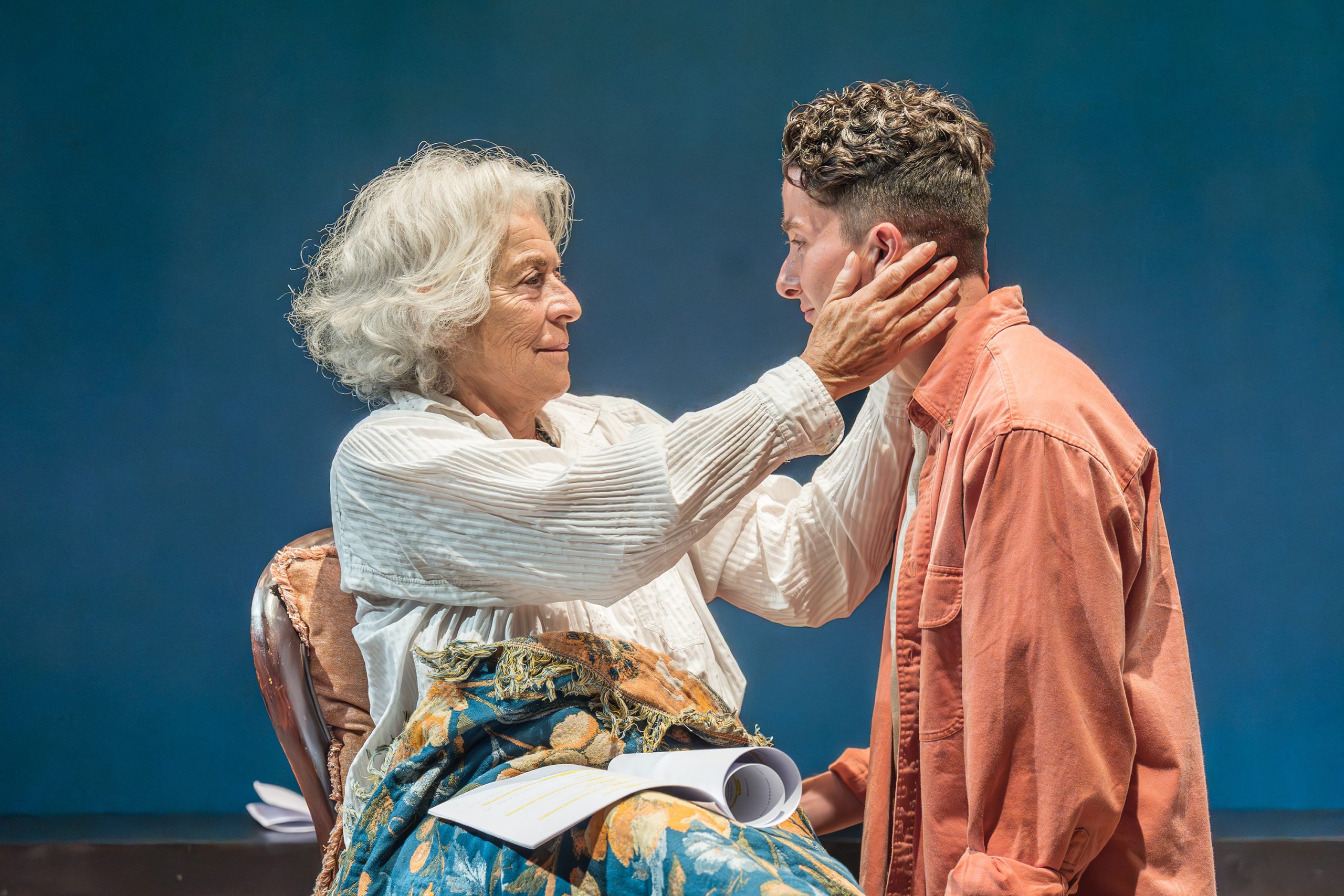
We Had a World is a memory play, one man’s autobiographical account of the two women who raised him, staged as an act of theatrical reconstruction rather than straight narrative. Downstairs at the Hampstead Theatre, the audience sits on three sides of a bare, warmly lit playing space, close enough to feel like eavesdroppers on someone else’s therapy session. Joshua, a thinly disguised stand-in for the playwright, addresses us directly throughout, casting his mother and grandmother in supporting roles as waiters, boyfriends and long-dead relatives whenever the story requires an extra body.
Renee, Joshua’s grandmother, has been given roughly two months to live, and on her way out she extracts a promise: write the family down, warts and all, holding nothing back. What follows spans thirty years of New York life, from a childhood spent being dragged round galleries too risqué for a nine-year-old to the adult reckonings that come when somebody is finally dying. Ellen, Joshua’s mother, is a lawyer who has spent decades holding her own mother together while getting almost nothing back for the effort, and her estrangement from her sister sits like an unexploded bomb somewhere off to the side of the story. Renee, for her part, turns out to be less the eccentric confidante of Joshua’s childhood memories and more a woman whose charm concealed a genuine, corrosive drinking problem, one that shaped Ellen’s whole life in ways Joshua is only piecing together as an adult. The play jumps between decades without warning, letting each character’s version of events contradict the others, so a single afternoon at a museum or a single unreturned phone call becomes three different stories depending on who is telling it.
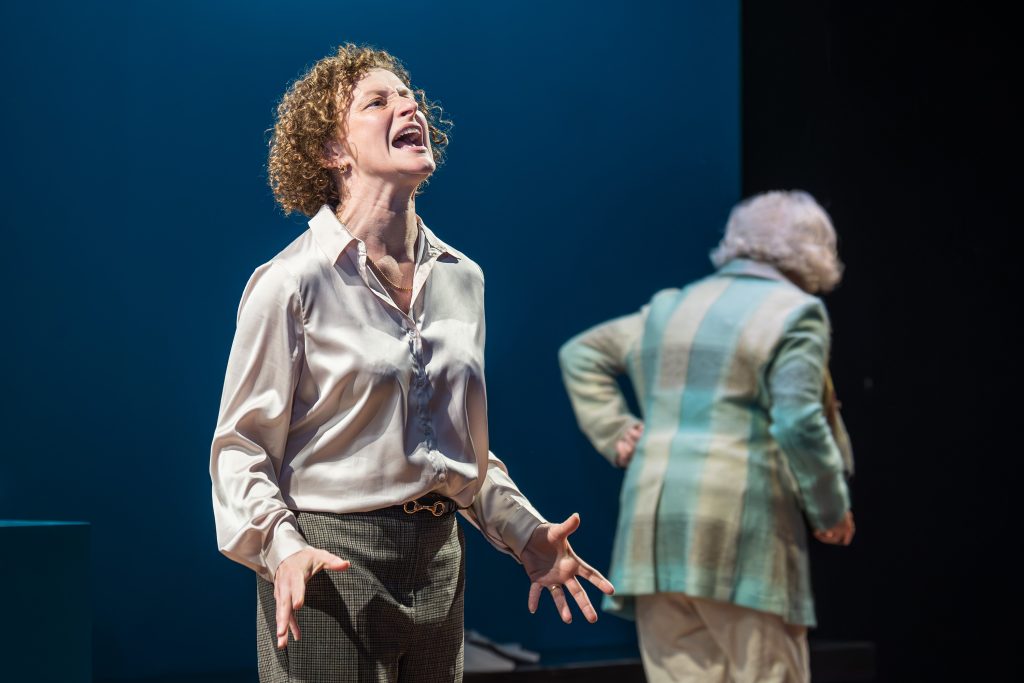
Ryan Kopel holds all of this together as Joshua. He plays the narrator as someone still working things out in real time, glancing at his own script with something like surprise, which stops the character curdling into the smug know-it-all this kind of meta-narration can easily produce. Anna Francolini gives Ellen a permanently tightened jaw, a woman running on the fuel of duties she never chose, and her best moment comes when she has to choose between protecting herself and doing right by a sister she has already written off; you can watch both instincts fighting for the same half-second of stage time. Suzanne Bertish, as Renee, gets the showiest role and does not waste it, finding the joke in a line about senior citizens welcoming milder winters and then, without any visible gear change, letting a single unguarded look reveal the fear underneath the bravado.
Where the play falters is pacing. Harmon is clearly fascinated by the unreliability of memory, and there is a real experiment buried in the second half, where Joshua hands his mother and grandmother a transcript of an actual recorded conversation and asks them to re-enact it verbatim. It is a genuinely odd, quietly unsettling piece of theatre, the kind of moment where you stop thinking about craft and just watch three people be strange together. Too often elsewhere, though, scenes get cut off just as they threaten to say something real, particularly anything to do with Ellen’s estranged sister, whose absence is felt but never really explained. A late scene involving Renee’s reappearance beside a shop window, admiring a pair of gloves she can no longer actually see, has all the ingredients of something devastating and clears its throat rather than following through.
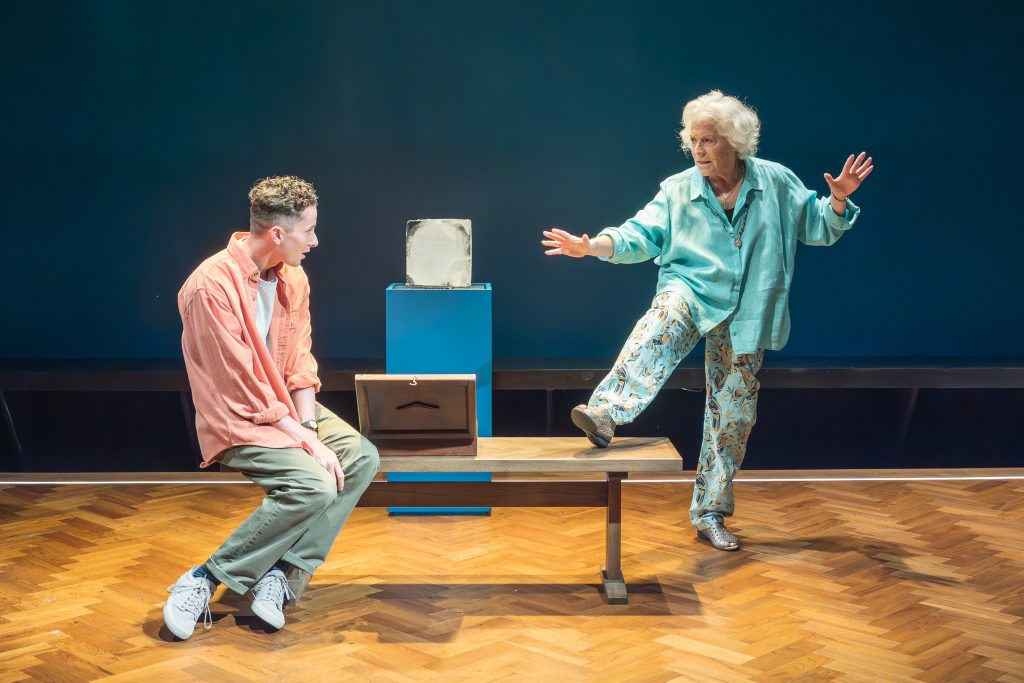
Sarah Beaton’s design does one job with real economy: a block of ice sits upstage for the entire evening, melting steadily, doing double duty as a nod to the climate anxieties Joshua keeps circling back to and a blunt visual countdown on Renee’s remaining time. It is not subtle, but it does not need to be, and Joshua Gadsby’s lighting keeps the whole thing feeling intimate rather than schematic.
None of this quite adds up to the gut-punch the material promises. What it does deliver, reliably, is sharp dialogue, three performers working at full stretch, and a genuinely funny account of a family that Harmon clearly still loves even after being asked to be vitriolic about it.