

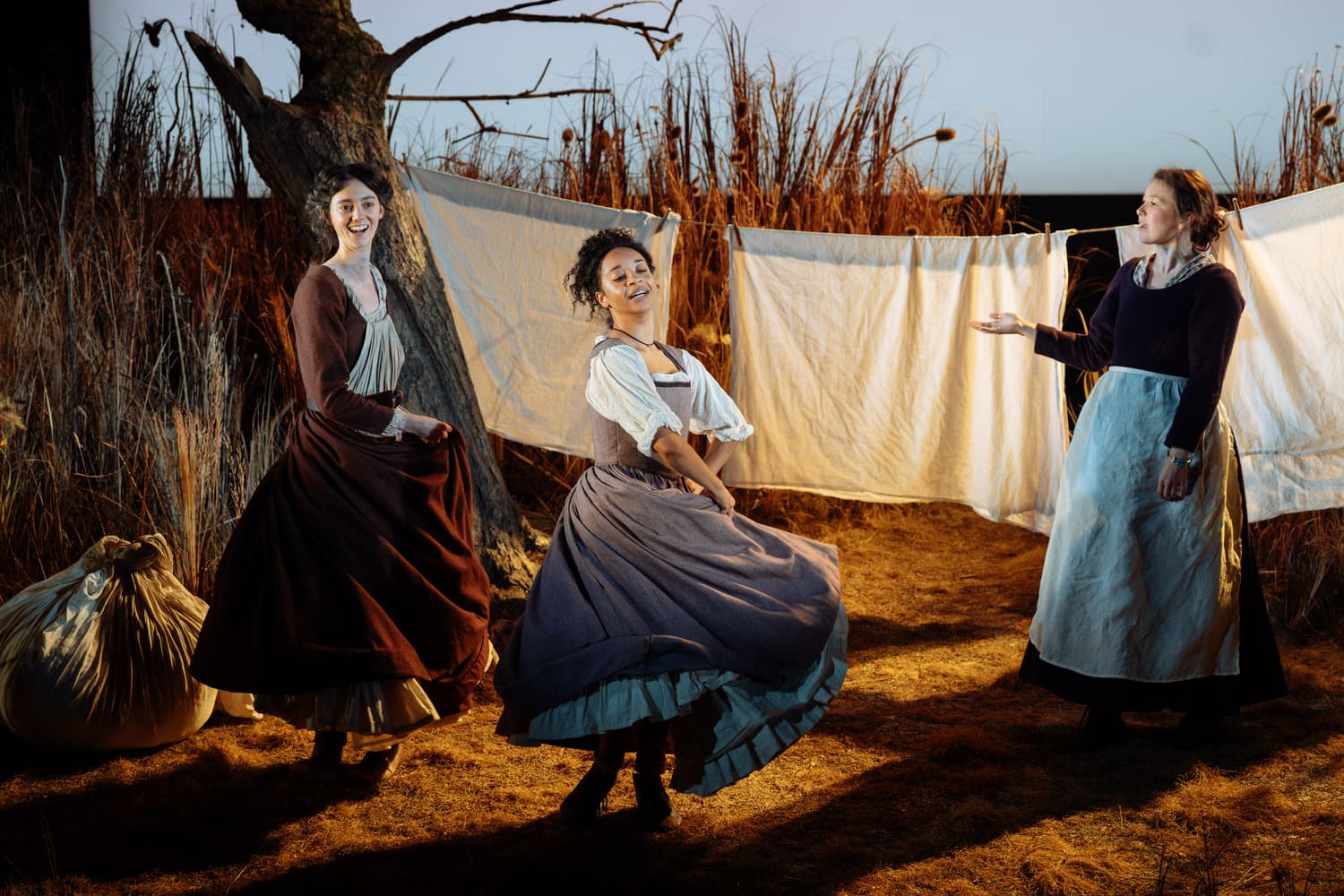
Ava Pickett’s debut has arrived in the West End trailing so much hype it could power the National Grid. This is smart, funny, properly upsetting theatre, even if the final stretch doesn’t quite stick the landing the rest of the evening promises.
It’s a historical drama that refuses to behave like one: a study of female friendship and creeping misogyny, dressed in Tudor clothes but speaking in the accents of Essex circa now. Anna (Siena Kelly), Jane (Liv Hill) and Mariella (Tanya Reynolds) are three young women who’ve grown up together in a rural corner of Essex, and the play catches them mid-gossip about news travelling down from London: the King has had Queen Anne Boleyn arrested.
Anna, introduced shagging against a tree, shrugs the whole thing off. Kings don’t kill their wives, she reasons. It just doesn’t happen. Jane, the anxious one biding her time until an arranged marriage, isn’t so sure. Mariella, meanwhile, is a trainee midwife with the misfortune of caring for the pregnant wife of a man she once loved. As the news from the capital darkens, so does the temperature of the village. Old certainties about which men can be trusted start to wobble, then buckle entirely, and the three women who once seemed inseparable begin to eye each other differently.
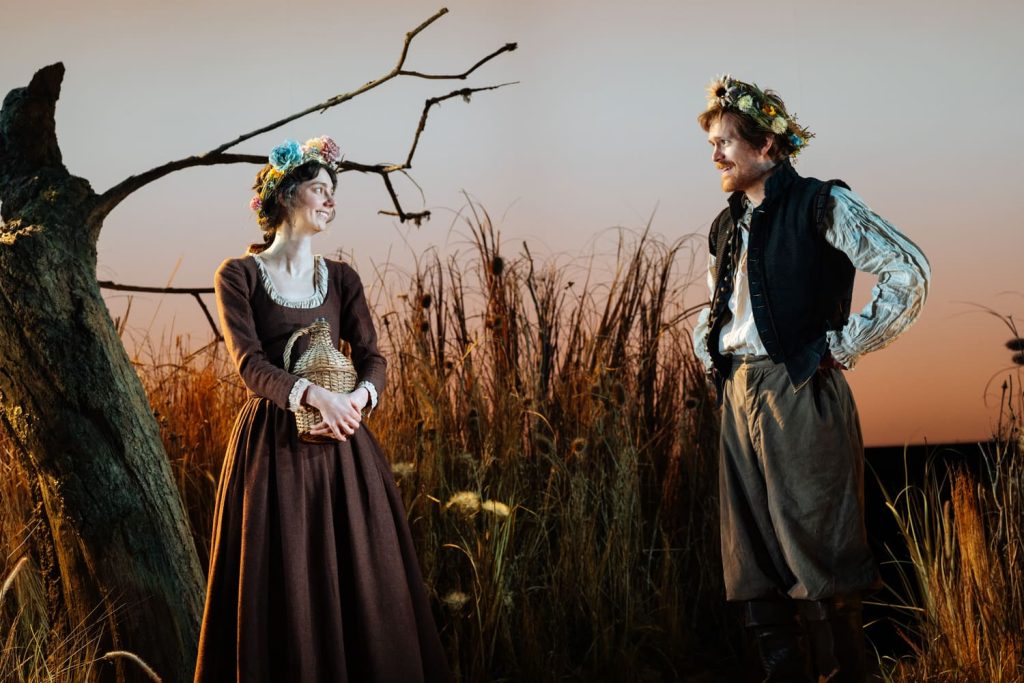
Kelly gives Anna a recklessness that reads as armour rather than folly, and when the world turns on her for it, the injustice lands like a slap. Hill’s Jane is the play’s moral weather vane, and she plays the shift from prim caution to something harder with barely a wasted gesture. Reynolds, meanwhile, does the finest work of the evening as Mariella, wringing dry comedy and real anguish out of a woman who has made peace with disappointment long before the play begins, and then discovers she hasn’t, not really. Oliver Johnstone’s Richard charts a genuinely unnerving path from charm to menace, while George Kemp’s William proves that passivity, in this world, is its own kind of danger.
Pickett’s dialogue crackles, deliberately anachronistic and all the funnier for it. Nobody in Tudor Essex actually said “fackin’ hell,” presumably, but the energy is entirely believable, and the laughs land early. There’s a lovely, throwaway exchange about turning over a new leaf, singular, that gets one of the biggest laughs of the night precisely because it doesn’t announce itself as a joke. The play’s real subject isn’t Anne Boleyn at all. It’s the way violence against one woman, however remote and however royal, gives permission for violence against all the others, all the way down. That argument is not subtle, and Pickett doesn’t pretend it is, but it’s delivered with enough wit and specificity that it never curdles into lecture.
Where the evening falters slightly is in its final quarter, once the comedy has been mostly wrung out and what’s left is dread. The tonal control that makes the first three-quarters so electric loosens just when the play most needs to hold its nerve, and the ending, while devastating in isolation, arrives a beat or two after its emotional peak rather than at it. It’s the kind of thing you only notice because everything preceding it was so tightly wound.
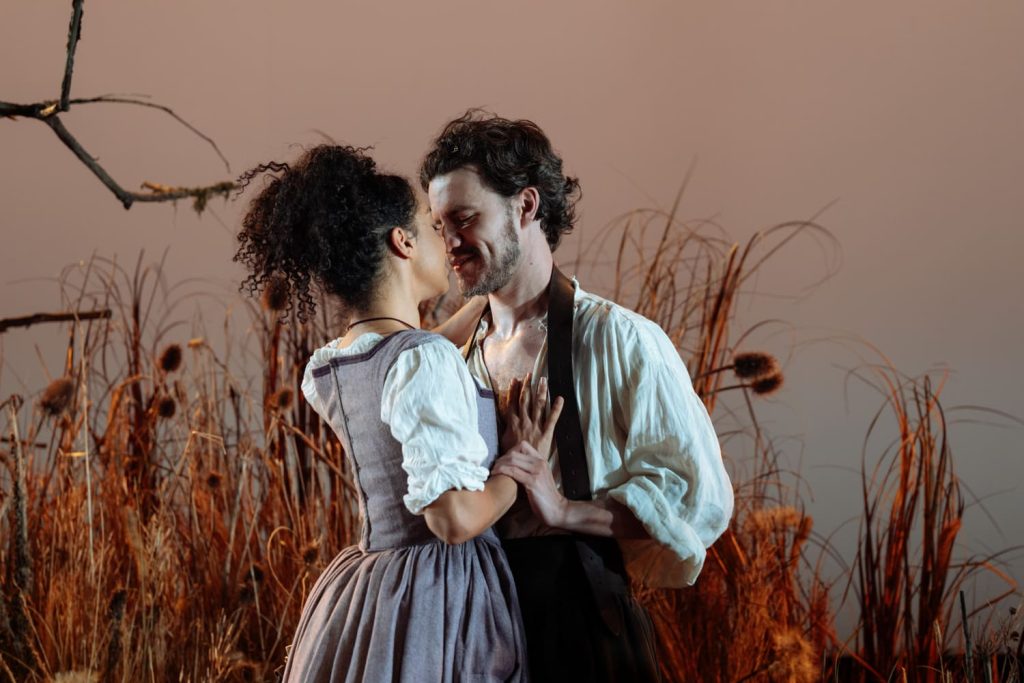
Lyndsey Turner directs with a sure hand throughout, marking each scene change with a blackout and a swell of Tingying Dong’s unsettling score, so that the field itself seems to change character as the story darkens. Jack Knowles’ lighting does real narrative work here: what starts as a warm, hazy glow curdles slowly into something closer to a wound, so gradually you clock the shift only once it’s complete. Max Jones’ set, little more than a marshy field with a single watching tree, does more with less than some West End productions manage with a revolve and a fly tower.
There will inevitably be comparisons to Wolf Hall’s view from inside the corridors of power, but 1536’s trick is to stay resolutely outside them, and it’s the stronger play for it. This isn’t about six wives belting power ballads. It’s about the women who never got near the palace and paid for it anyway.