

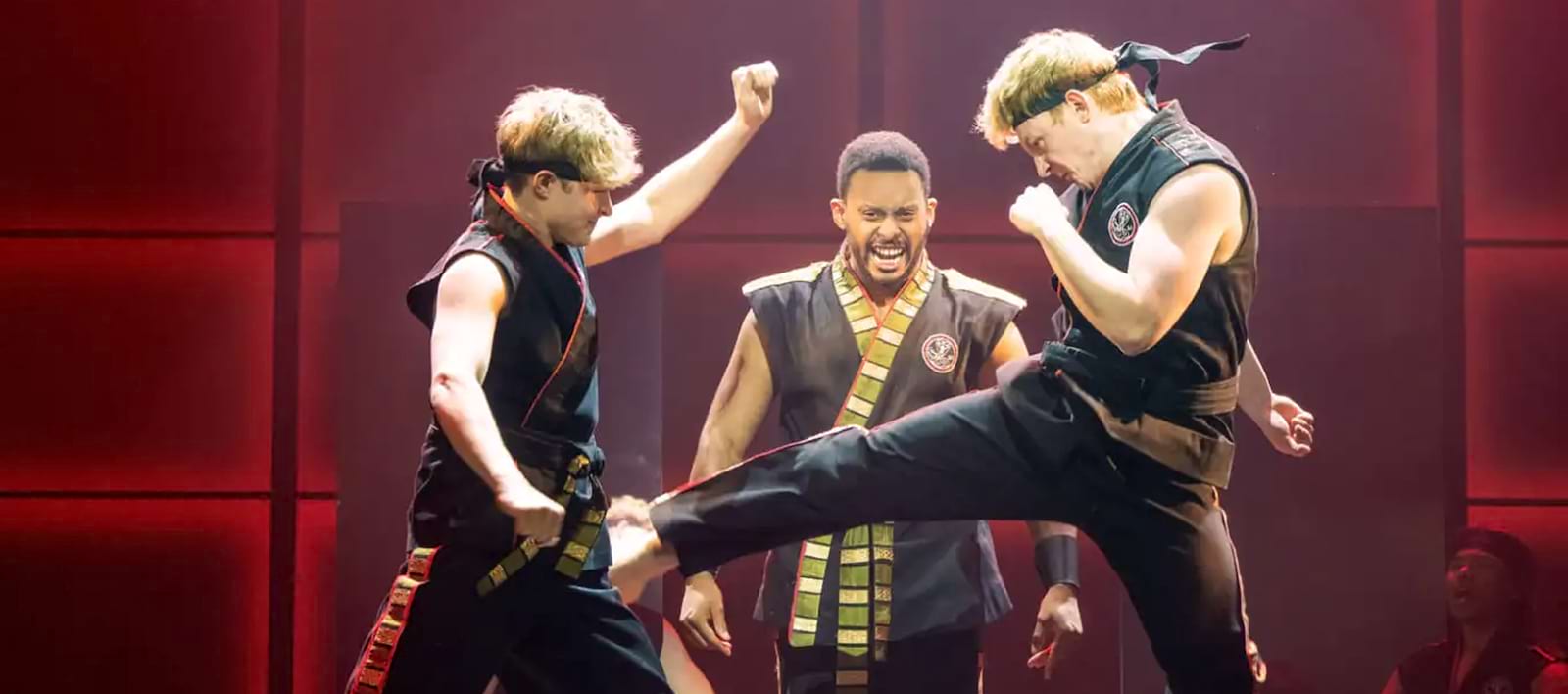
The Karate Kid the Musical lands most of its punches, but it never quite delivers a knockout blow. What you get instead is a warm, well-drilled show that borrows heavily from nostalgia and, for the most part, does a decent job.
This is a coming-of-age musical adaptation of Robert Mark Kamen’s 1984 film, and it wastes no time setting up its stakes. Daniel LaRusso has just moved from New Jersey to a new town with his mother, Lucille, and within a scene or two he has caught the eye of Ali Mills and the ire of her ex, Johnny Lawrence, star pupil at the Cobra Kai dojo. The rivalry escalates quickly from playground scuffle to something with real teeth, and Daniel finds an unlikely protector in Mr Miyagi, the quietly formidable handyman next door. What follows is the shape everyone in the auditorium already knows: chores that turn out to be lessons, and a mentor who teaches balance before he teaches a single punch. The pleasure here is not surprise but recognition. It hits the beats the audience came for, from the household tasks that build to something more than muscle memory (wax on, wax off), through to a training sequence set against Mr Miyagi’s garden that plays like a held breath. Where it takes gentle liberties, mostly in fleshing out Daniel’s grief for his late father, it does so without derailing the momentum. This is not a show that forgets why people bought tickets.
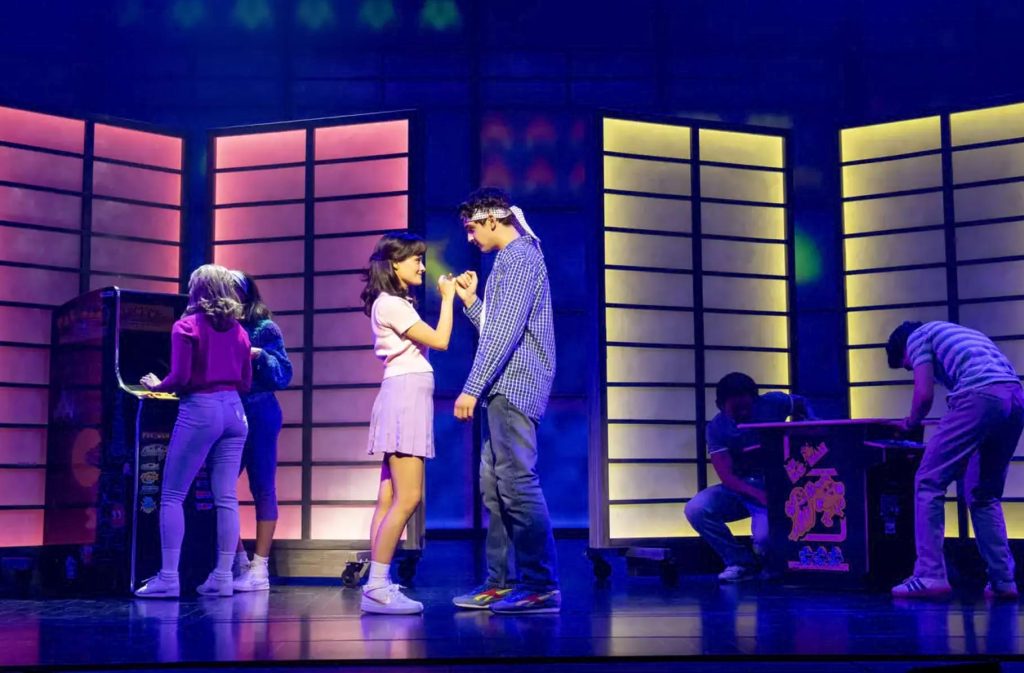
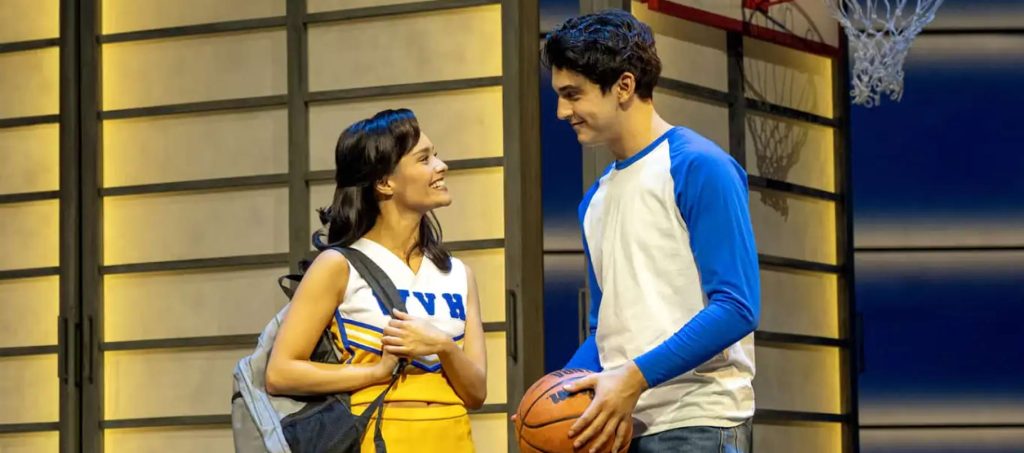
Adrian Pang is the reason the evening has a heartbeat. His Mr Miyagi underplays everything, delivering advice in clipped, almost throwaway lines that land harder for their restraint, and he turns the character’s imperfect English into a running source of warmth rather than a punchline at his expense. Gino Ochello, making his professional stage debut, gives Daniel a nervy, coltish physicality in the opening scenes that gradually straightens into something closer to conviction, and the chemistry between the two performers is the show’s genuine engine. Abigail Amin brings a clear, unforced charm to Ali that keeps her from being simply the prize in someone else’s contest, while Joe Simmons resists the temptation to play Johnny as a pantomime villain, finding flickers of a boy trapped by his own dojo’s code rather than simply cruel. Sharon Sexton, as Lucille, gets comparatively little stage time but makes the most of a mother-son number, landing both the humour and the ache of a woman starting over.
The book keeps faith with the film’s central idea, that discipline and self-respect matter more than victory, and it states that theme plainly rather than trusting the audience to find it. Drew Gasparini’s score is, at best, efficient, doing its job of moving the plot along without ever stopping to say something only music could say. A handful of numbers just about resonate, such as a tender exchange between Daniel and his mother, but too many others settle for obvious rhymes over real insight.
None of which stops the tournament finale from working. The audience wants that crane kick, and when it arrives, it still gets a genuine gasp, sentiment and showmanship in equal measure. This is a solidly built, big-hearted evening that will delight anyone with fondness for the film, particularly if Pang is on stage. It just never quite convinces you it needed to sing.