

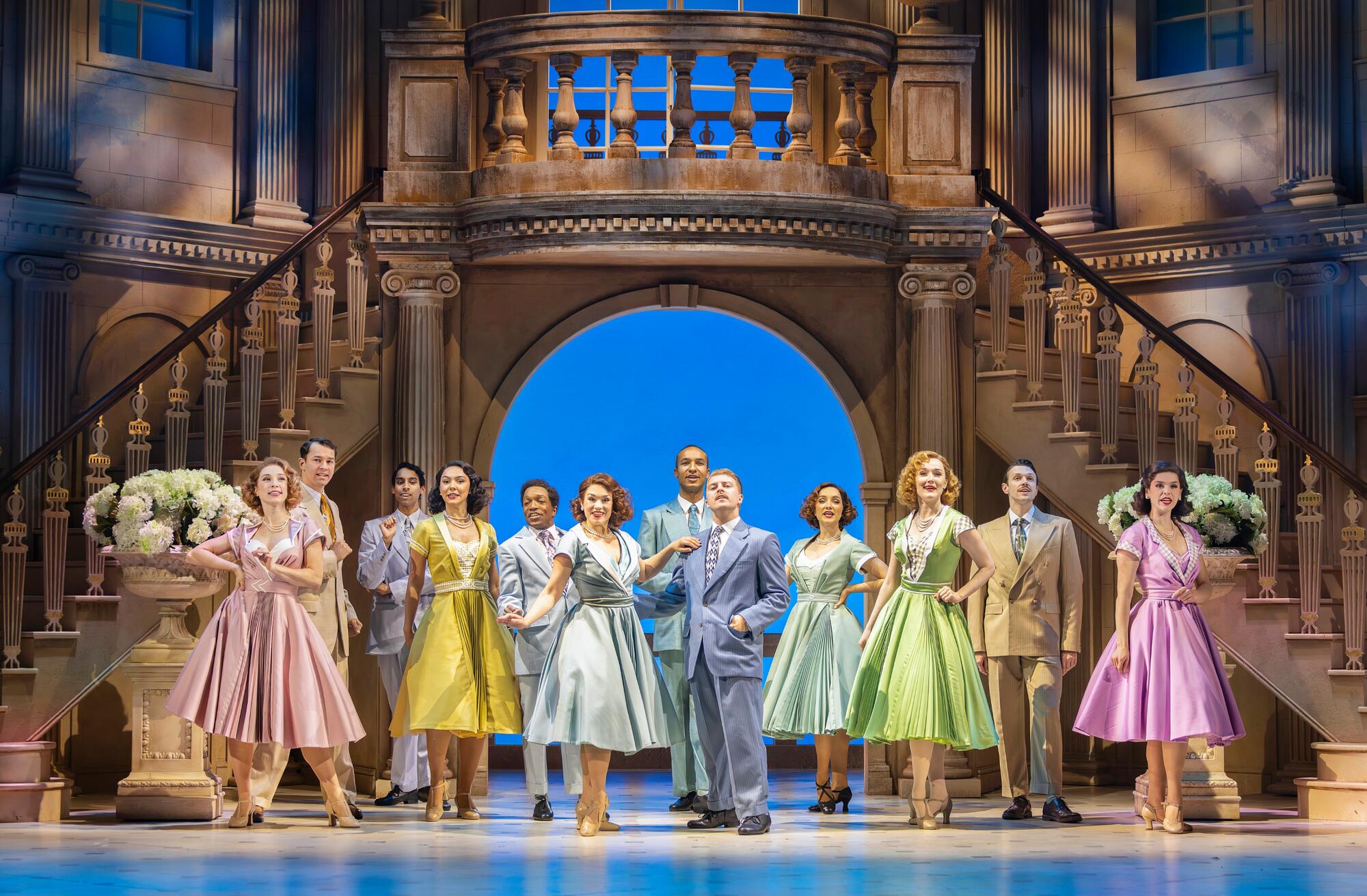
There’s a swell party going on at the Barbican this summer. High Society is warm, handsome and stuffed with tunes you will still be humming around Moorgate station, even if it never quite convinces you the world was crying out for a third helping of Cole Porter.
This is Golden Age musical comedy in its purest form, adapted from Philip Barry’s play The Philadelphia Story and the 1956 film of the same name, with a book by Arthur Kopit and extra material from Bob Martin and Susan Birkenhead. Tracy Lord, a Newport socialite with a taste for perfectionism and a weakness for champagne, is two days from marrying the safe, sturdy George Kittredge when her charming, unreliable ex-husband Dexter Haven reappears. He arrives trailing two undercover tabloid reporters, Mike Connor and Liz Imbrie, who are meant to be covering the society wedding of the year and end up rather more entangled in it than their editor intended.
What follows is a weekend of mistaken motives and misplaced drinks, staged largely around one very long, very drunken engagement party. Tracy’s kid sister Dinah causes gleeful havoc, her mother Margaret welcomes her cheating husband back into the fold without much fuss, and her Uncle Willie treats the entire event as a personal excuse to misbehave, insisting all the while that this really is the swankiest, most sophisticated corner of the world to be stuck in. Mike, sent to expose upper class hypocrisy, finds himself charmed rather than appalled by Tracy, and by the small hours of the following morning nearly everyone’s plans have changed. The wedding, when it finally arrives, is not quite the one any of the characters were expecting, least of all Tracy herself, though the show never pretends the ending was ever in doubt.
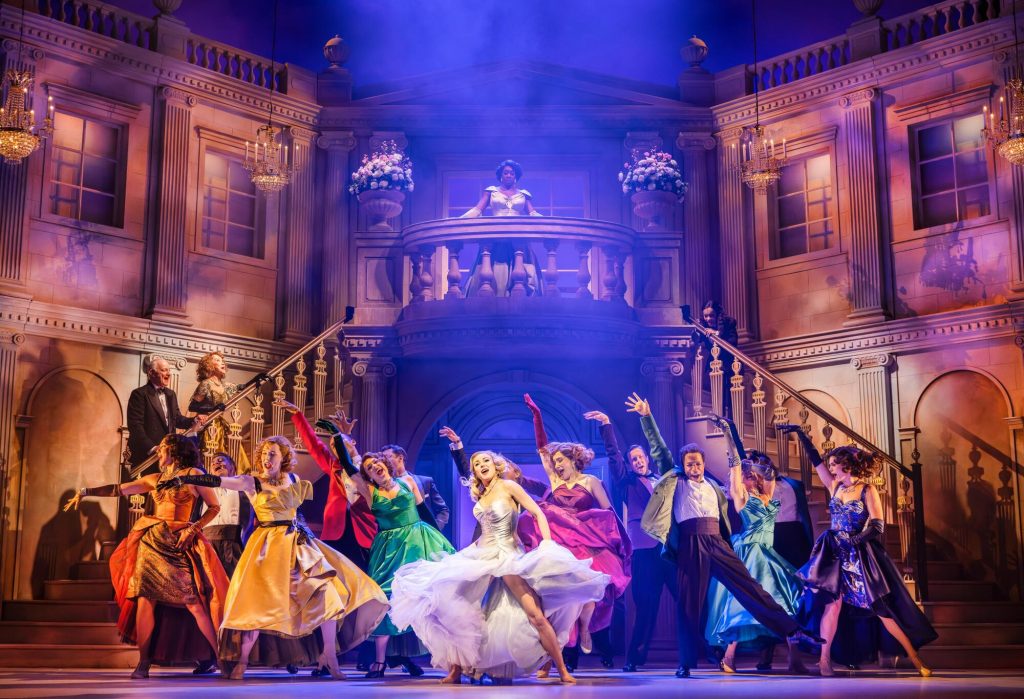
Freddie Fox, making a genuinely impressive musical theatre debut as Mike, is the production’s real discovery. His delivery on Well, Did You Evah? has the rangy, needling energy of a man talking himself into trouble, and he turns Mike’s slow thaw towards the Lords into something properly funny rather than merely convenient. Carly Mercedes Dyer’s Liz gets less stage time than she deserves, but her rendition of I’ve Got You Under My Skin, delivered as dawn breaks over the party, stops the show cold in the best possible way. Nigel Lindsay treats Uncle Willie’s numbers like a man finally allowed off the leash, throwing himself into Now You Has Jazz with a gusto that papers over some of the character’s thinner jokes.
Helen George’s Tracy is a trickier proposition. She has the poise and the physical comedy down, particularly a late first-act tumble that gets one of the evening’s biggest laughs, but the coolly wounded interior that made Katharine Hepburn and Grace Kelly’s versions so watchable stays frustratingly out of reach. You believe she is adored. You believe rather less that she has spent years building emotional armour against being hurt again, which makes the character’s late thaw feel more like plot mechanics than genuine change.
Porter’s score remains the whole reason to be here, and rightly so: Who Wants to Be a Millionaire?, Let’s Misbehave, True Love, the hits arrive with a regularity that borders on excessive but never dull. Kopit’s book, though, keeps the story in service of the setlist rather than the other way round, and the first act sags noticeably whenever nobody is singing. This High Society tells us, gently and repeatedly, that the very rich are not so different from the rest of us underneath their absurd wealth, but it never digs far enough to make that observation feel like more than a mild observation.
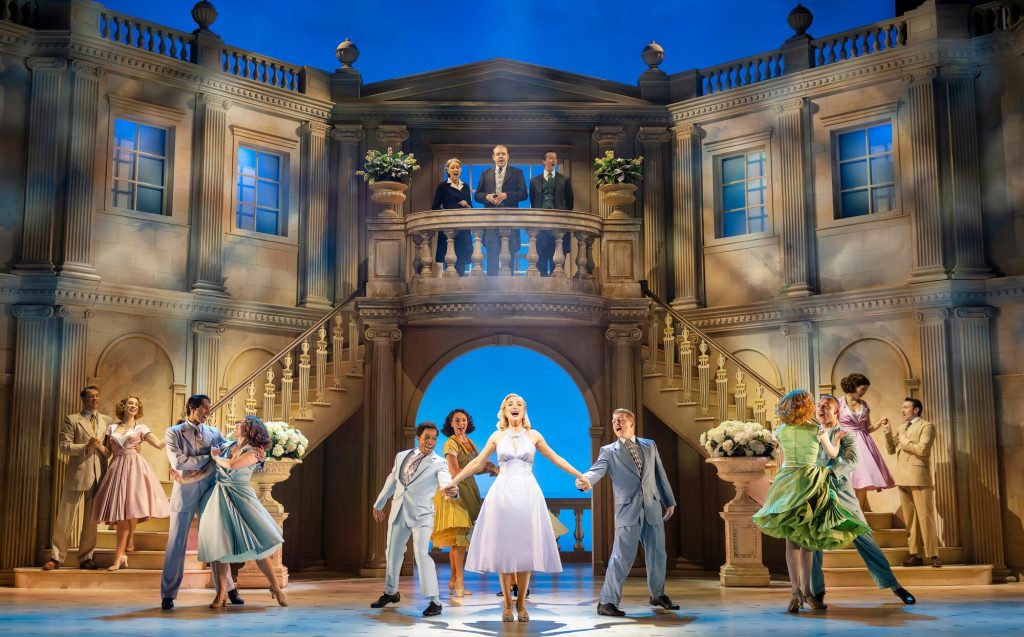
Tom Rogers’ set is where the money clearly went, and it shows: two sweeping staircases, a working swimming pool, and a wedding gift table so laden with taxidermy and silverware it becomes its own running joke. Jon Morrell’s costumes glow in the same rich, sun-baked palette, and Howard Hudson’s lighting turns the party’s slow slide into dawn into something genuinely lovely to watch.
It is impossible not to measure this against the Barbican’s earlier golden age revivals. Anything Goes had the nerve to let its choreography run wild across an entire ocean liner deck, and Kiss Me, Kate had two shows fighting for space and real heat between its leads. High Society, by comparison, plays things safer: Anthony Van Laast’s choreography is polished rather than thrilling, and there is a sense, particularly in Let’s Misbehave, of a number holding back exactly when it should be letting rip. The whole evening could do with borrowing a little of that earlier abandon.
None of which stops this being a genuinely enjoyable night out. The second act tightens considerably, the ensemble work is sharp throughout, and by the time the wedding party assembles for its final reckoning, the show has more than earned its ovation. It just never quite reaches the heights its two Barbican predecessors set, and against Porter’s own songbook, merely very good is a strange place to land.