For its first hour, Miriam Battye’s new coming-of-age play is one of the funniest things you will see in London this year, raw, fizzing, and unnervingly accurate about what it feels like to be sixteen and convinced that everyone else has already figured it out. Then something shifts, the laughs dry up, and the play seems to get brave about losing its nerve about quite what it wants to be.
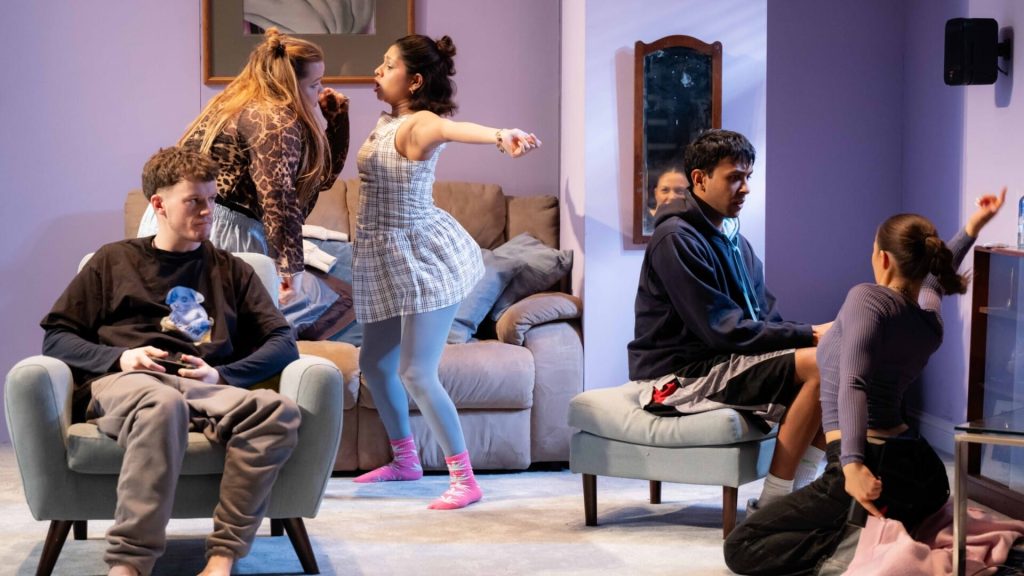
The Virgins is a new comedy-drama, rooted in that most reliably fertile of theatrical territories: the disastrous Friday night. Three girls, Chloe (Anushka Chakravarti), Jess (Ella Bruccoleri) and Phoebe (Molly Hewitt-Richards), are getting ready for a night out. The plan is ambitious: go to a club, pull some boys, come home, eat chicken dippers. To give themselves a competitive edge they have recruited Anya (Zoë Armer), a girl from the year above who has, allegedly, done it already. On the other side of the wall, in the living room, Chloe’s brother Joel (Ragevan Vasan) and his taciturn mate Mel (Alec Boaden) are playing video games and saying approximately nothing about the things that matter most to them.
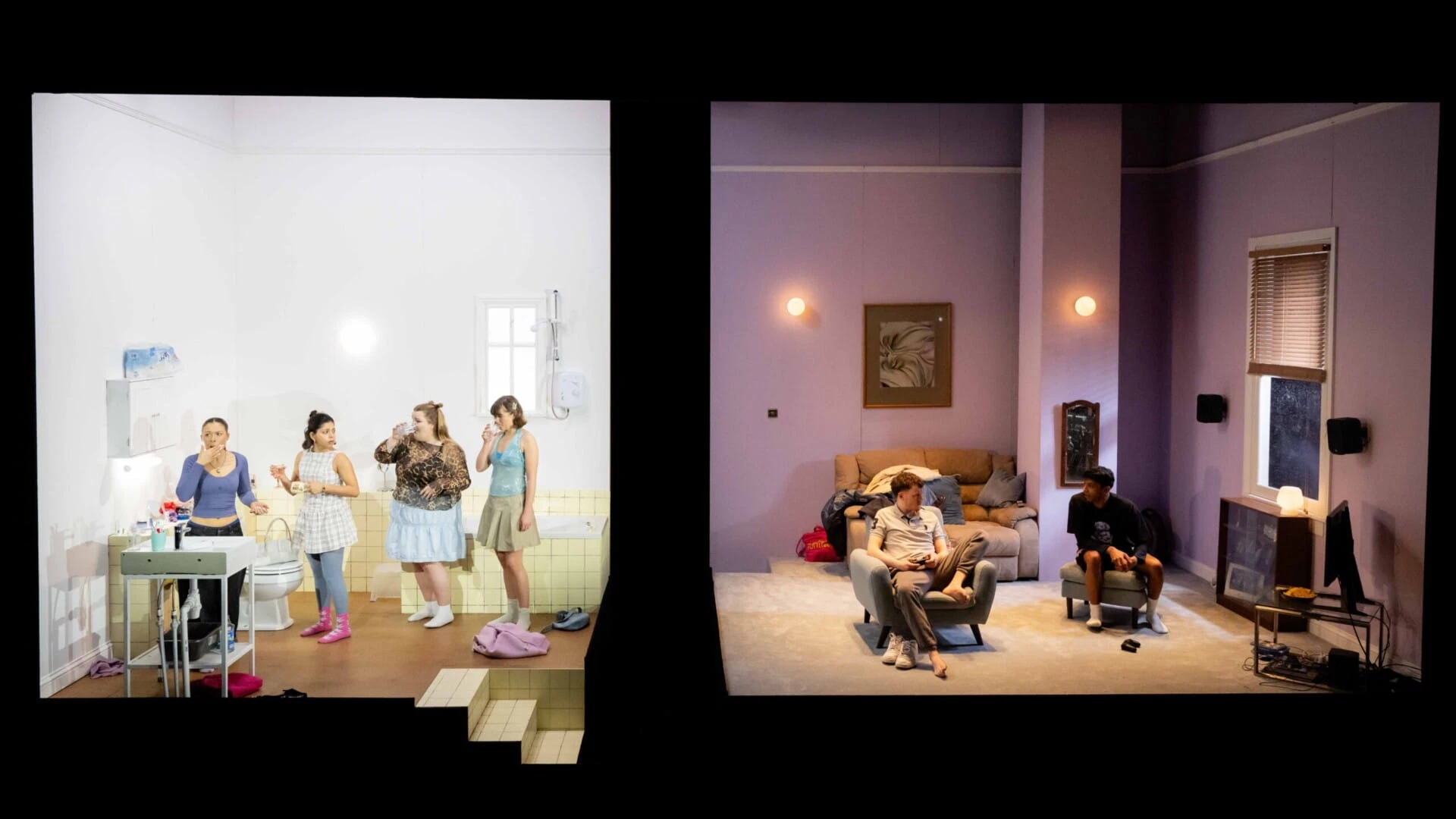
Rosie Elnile’s set is a split-stage masterstroke: a buttercup-yellow bathroom crammed with the wreckage of getting ready on one side, a dim lounge on the other, a corridor of no-man’s-land running between. The architecture does half the play’s work before anyone opens their mouth. Boys and girls want each other, occupy the same house, and may as well be on different planets.
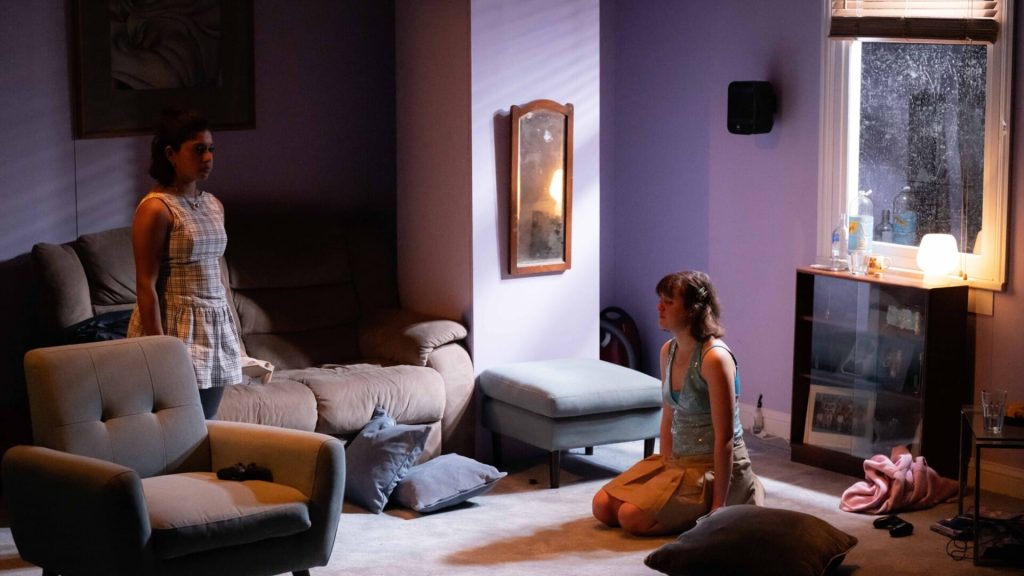
In that first hour, the writing is genuinely brilliant. Battye, who gave us Strategic Love Play and shaped several seasons of Succession, understands exactly how these conversations actually sound, overlapping, competitive, tender, occasionally foul. Phoebe notes everything on her phone as though filing it away for future academic use. Hewitt-Richards plays the role with the precise timing of someone who has been funny her whole life and knows it, and the audience loved her for it. A dance-off in the living room that tips suddenly into genuine feeling is the kind of scene that earns Battye her reputation. When Ragevan Vasan, as Joel, crumples silently to the floor under the weight of something he cannot bring himself to say, it lands harder than a speech three times the length.
There is a question, though, and it’s a fair one, of whether Battye is trying to say two things at once and getting only halfway through each. The play’s darker material, involving sexual assault, pornography’s effect on young men, and the bleak economics of reputation, is introduced with considerable force in the final half-hour. But it arrives too quickly, without enough architecture to hold it, and the evening goes from roaring to bewildered without quite pausing to explain the journey. Mel is given a monologue of sudden, genuine poetry about desire and disappointment, but it floats free of the character we have been watching, it could belong to almost anyone. The boys remain underdeveloped throughout, which is a structural problem when the play is asking us to understand both sides of the chasm.
There was a further, less forgivable problem on the night: the sound. Anna Clock’s design calls for sweeping orchestral blackouts between scenes, grandiose Hollywood swells that deliberately mock the epic self-importance of teenage feeling, and that work beautifully in concept. The amplification of the spoken word, however, was badly calibrated. Too low throughout, insufficiently projected, it meant a significant portion of the dialogue arrived as mumble rather than text, and Battye’s writing, which lives entirely in its specificity, cannot afford to be half-heard.
The cast throughout is excellent, and Jaz Woodcock-Stewart’s direction has real intelligence about when to let silence do the work. The production earns its stripes in the moments that sting, when the girls practise oral sex on a toothbrush, when Anya lets slip that sex is, she concedes, “not even that bad,” when something that begins as comedy tips, without announcement, into something you feel in your chest. The trouble is that Battye wants the ending to carry a tragic weight the architecture hasn’t quite built toward. It’s a play with an extraordinary first two-thirds and an unresolved final third, worth seeing for what it gets absolutely right.